

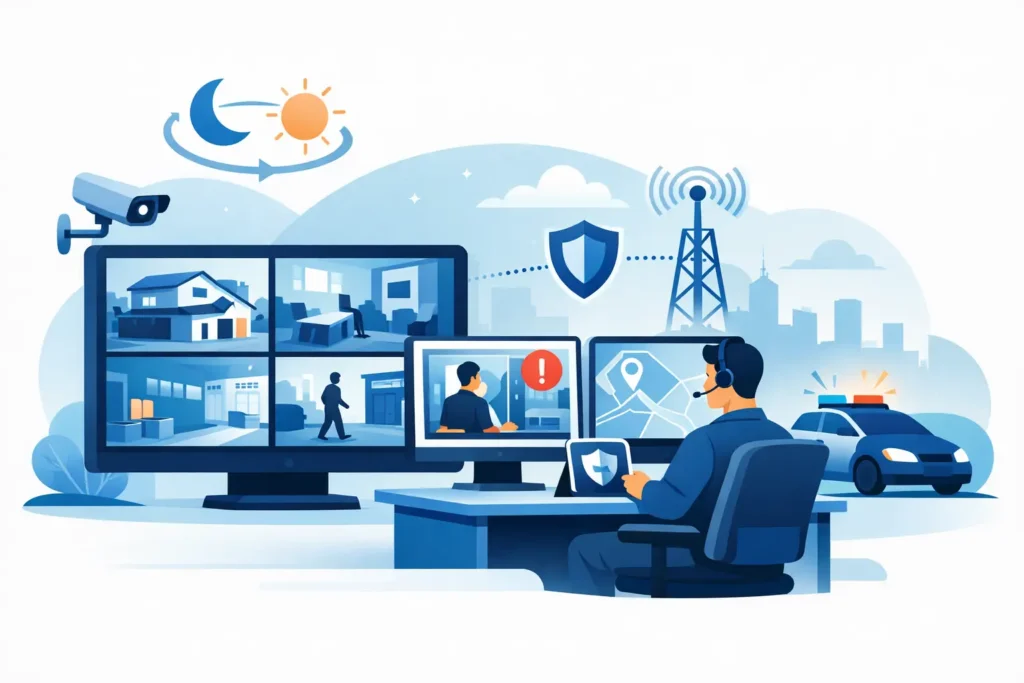
A camera that records an incident can be useful after the fact. A monitored security system can help you know about the incident while there is still time to respond. That is the practical difference 24/7 remote security monitoring makes for businesses, properties, and facilities that cannot afford to be unprotected after closing.
For a retail store, the risk may be a person testing a rear door after hours. For an industrial site, it may be unauthorized vehicle access or equipment movement outside scheduled operations. For a residential property, it may be a perimeter concern while the owner is away. Each situation requires more than video storage. It requires visibility, verification, and a clear response process.
What 24/7 Remote Security Monitoring Does
Remote monitoring connects cameras, alarms, access control, and video analytics to a professional monitoring process. When a system detects activity or an alarm condition, trained personnel can review the available information, assess whether the event needs action, and follow established response procedures.
The objective is not to react to every motion alert. Weather, wildlife, headlights, and routine activity can all create unnecessary notifications. A properly designed program uses camera placement, analytics settings, schedules, and human review to focus attention on events that may present a genuine security concern.
Depending on the system and the site plan, a response may include live audio intervention, notifying a designated contact, dispatching guard services, or contacting emergency services when appropriate. The right action depends on the nature of the event, the property, and the protocols agreed on in advance.
This creates a more controlled approach to after-hours protection. Instead of discovering a broken window, intrusion, or equipment issue the next morning, property owners and managers have a process for learning about it as it happens.
Why Recorded Video Alone Is Not Always Enough
Standard CCTV remains an essential part of physical security. High-definition video can document activity, support investigations, and provide valuable evidence. But recording alone generally means someone must notice the incident, review footage, and decide what to do next.
That gap can matter. A trespasser may leave before footage is reviewed. An alarm may sound without anyone verifying why it was triggered. A facilities manager may receive an alert in the middle of the night but have no way to assess whether it is a false alarm or an active threat.
Remote security monitoring adds an active layer to surveillance. It helps turn cameras and alarms into a managed security operation rather than a collection of devices working independently.
There are trade-offs. Remote monitoring is not a replacement for onsite guards in every environment. High-traffic facilities, sensitive sites, major events, and locations with recurring access-control challenges may benefit from a combination of monitored technology and uniformed personnel. The strongest security plans use each resource where it delivers the most value.
Building a System That Supports Fast Decisions
Effective monitoring begins well before the first alert. The quality of the response depends on the quality of the security design.
Cameras need purpose, not just coverage
A camera should be positioned to answer a specific question: Who entered the loading area? Did a vehicle approach the gate? Is someone attempting to access a restricted door? Wide views can provide context, while focused views help identify people, vehicles, and actions.
Poor lighting, obstructed sightlines, and cameras mounted too high or too far away can limit what a monitoring team can verify. The goal is usable video at the points where risk is most likely to occur, including entrances, exits, cash-handling areas, loading zones, fenced perimeters, and equipment storage.
Analytics should reduce noise
AI-powered video analytics can identify defined activity such as people entering a restricted area, vehicles crossing a virtual line, loitering, or objects being removed. Used correctly, these tools reduce the number of routine alerts that require review.
Settings must reflect real site activity. A retail plaza has different operating patterns than a warehouse, office building, or construction site. If analytics are too sensitive, teams receive excessive alerts. If they are too limited, important events may be missed. Periodic adjustment is part of keeping a monitoring program effective.
Response instructions must be clear
When an event occurs, there should be no uncertainty about who receives a call or what happens next. A response plan can identify emergency contacts, approved guard dispatch procedures, access instructions, escalation levels, and circumstances that require emergency services.
This is especially valuable for organizations with multiple managers, distributed locations, or rotating staff. Clear protocols prevent delays caused by trying to locate the right person during an overnight incident.
Where Continuous Monitoring Delivers the Most Value
The need for around-the-clock oversight is not limited to large campuses or high-risk facilities. Many small and midsize organizations have predictable periods when a property is more exposed because staff are gone, doors are secured, and no one is available to investigate an alert.
Retail operations can use monitoring to watch after-hours entry points, delivery areas, and vulnerable inventory zones. Offices and professional buildings may need protection from unauthorized entry, vandalism, or access attempts outside normal schedules. Industrial properties can benefit from oversight of gates, yards, fuel storage, vehicles, and valuable equipment.
Residential owners may also need a dependable plan while traveling or when a property is vacant. In these settings, monitored cameras, alarms, smart access systems, and proactive maintenance can provide a stronger level of awareness than standalone devices.
Institutions and organizations managing sensitive events have additional considerations. They may require temporary monitoring coverage, guard support, controlled access, or documented incident reporting. The security program should scale to the situation rather than force every property into the same model.
Choosing the Right Level of Coverage
Not every location needs the same equipment or response level. A single small office may need monitored intrusion detection and key exterior cameras. A multi-building operation may need integrated video, access control, alarm monitoring, intercoms, and guard dispatch capability.
Start with the real risks: when the site is unoccupied, which assets are most exposed, where unauthorized access is likely, and how quickly a decision-maker can respond. Then consider what happens after an event is verified. If no one can safely attend the property, remote monitoring should connect to a reliable escalation option.
It is also worth reviewing system health. A camera that is offline, an alarm panel with a communication issue, or a blocked view can create a false sense of security. Ongoing maintenance and tamper monitoring help ensure the system remains ready when it is needed.
Maritect Investigations & Security Limited designs integrated programs that combine AI-enabled surveillance, alarm and access solutions, remote monitoring, and protective services based on the needs of each property. That approach gives clients a single security partner for both technology and response coverage.
Questions to Ask Before You Commit
A monitoring provider should be able to explain how alerts are received, verified, documented, and escalated. Ask whether the program supports your existing equipment or requires upgrades, how camera analytics will be configured, and what happens if a device goes offline.
You should also ask about response times, contact procedures, guard dispatch options, and reporting. Incident reports can help managers identify repeated concerns, adjust site procedures, and demonstrate due diligence when reviewing losses or security events.
Most importantly, make sure the plan reflects how your operation actually works. Security is strongest when monitoring procedures match staff schedules, delivery hours, visitor traffic, access rules, and the realities of the property.
A monitored system should give you more than alerts on a phone. It should give you a dependable set of eyes, a defined path to action, and the confidence that your property is being watched when no one else is there.
