

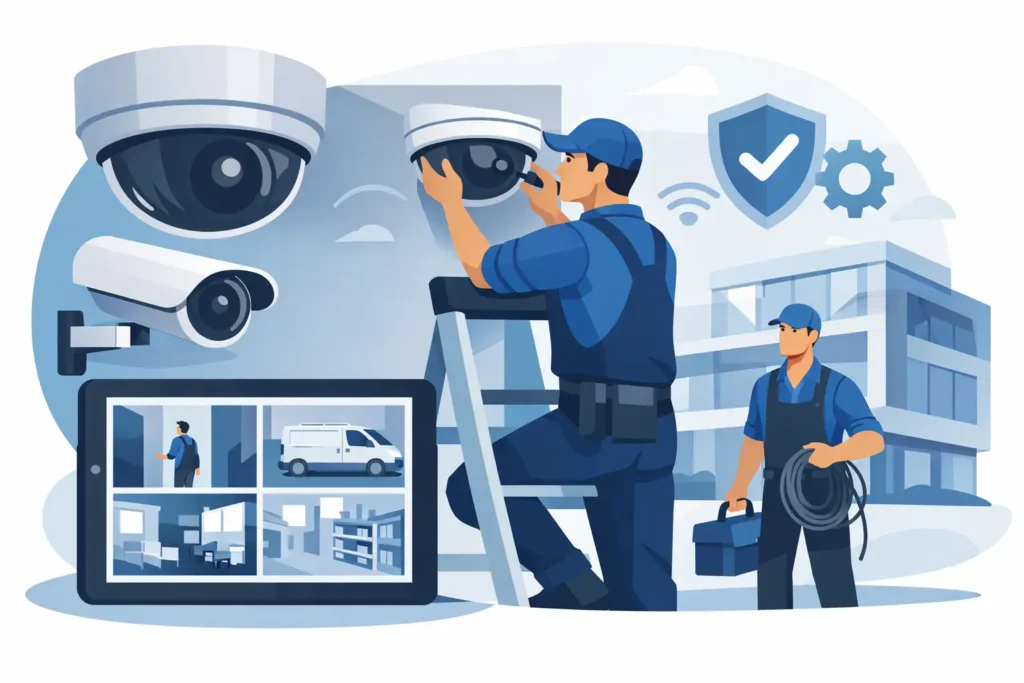
A camera mounted above a door is not a security program. If it cannot identify a person at night, record the right area, send an alert when activity matters, or provide usable video after an incident, it leaves the business exposed. Commercial CCTV installation services should do more than place equipment on walls. They should give owners and managers clear visibility, reliable evidence, and a practical way to respond.
For retail stores, offices, warehouses, multifamily properties, industrial sites, and institutions, the right system starts with how the property operates. Where do people enter? When is the site most vulnerable? Which assets need oversight? Who needs to receive an alert after hours? Answering these questions before installation is what separates a useful security system from a collection of cameras.
What Commercial CCTV Installation Services Should Deliver
A professionally designed CCTV system supports prevention, response, and accountability. Visible cameras can discourage theft, trespassing, and unauthorized access. Recorded video gives management a factual record when a loss, accident, complaint, or security concern needs to be investigated. Remote access can help authorized staff check on a site without driving there.
The value is not simply in having more footage. It is in having the right footage when it is needed. A camera aimed too wide may show that something happened but not provide enough detail to identify a person or read a license plate. A poorly lit loading area may produce unusable nighttime video. A system with no retention plan can overwrite critical footage before anyone realizes there is an issue.
Professional installation addresses these details from the beginning. It considers camera type, lens angle, lighting, mounting height, network capacity, recording storage, user permissions, and the response process. The result should match the risk at each location rather than force every area into the same camera setup.
Start With a Site-Specific Security Assessment
Every commercial property has different pressure points. A retail operation may need strong coverage at entrances, point-of-sale areas, stockrooms, and delivery doors. A warehouse may need visibility across loading bays, perimeter gates, inventory zones, and vehicle traffic. An office may focus on visitor access, sensitive records, server rooms, and after-hours entry.
A site assessment identifies where cameras can make the greatest difference and where they cannot. Cameras are highly effective for observation and documentation, but they do not physically stop a person from entering a restricted area. A vulnerable rear door may also require access control, a monitored alarm, improved lighting, or a guard response plan. Security works best when each layer supports the next.
The assessment should also account for daily operations. Cameras should protect the site without creating unnecessary disruption for staff, customers, or visitors. In employee areas, organizations must balance security needs with privacy expectations and applicable workplace rules. Clear policies around camera use, video access, and retention protect both the organization and the people on site.
Coverage Is About Purpose, Not Camera Count
The right question is not, “How many cameras do we need?” It is, “What decision must this camera support?” An entrance camera may need face-level detail. A parking lot camera may need broad situational awareness. A cash-handling area may need a clear view of transactions, while a gate camera may need to capture vehicles and license plates.
This purpose-driven approach prevents common gaps. It also avoids overspending on high-specification cameras in places where a standard camera would perform well. A custom design uses the appropriate technology for each area and keeps the system scalable as the property, staff, or operating hours change.
Choose Technology That Supports Faster Awareness
High-definition video remains essential, but image quality is only one part of an effective system. Low-light performance, infrared capability, wide dynamic range, weather-rated housings, and tamper detection can be just as important depending on the environment. Outdoor cameras need to perform through rain, snow, glare, and changing light. Indoor cameras may need discreet placement and reliable coverage in confined spaces.
AI-enabled video analytics can make a large camera system easier to manage. Instead of reviewing hours of ordinary activity, authorized users can receive alerts for defined events such as a person entering a restricted zone, a vehicle approaching a gate after hours, or movement at a closed facility. This can reduce false alarms compared with basic motion detection, which may react to shadows, weather, or routine activity.
Analytics need careful configuration. A setting that is too sensitive can overwhelm staff with alerts. A setting that is too narrow can miss activity that deserves attention. The best setup reflects the location, schedule, and threat profile of the site, then gets adjusted as operating conditions change.
Recording, Remote Access, and Retention Need a Plan
A commercial CCTV system is only useful if video is available when an event is discovered. That means choosing recording capacity based on the number of cameras, resolution, activity level, retention requirements, and whether recording is continuous or event-based. There is no universal retention period that fits every organization.
A business that needs to investigate customer disputes may require a different retention window than an industrial facility managing perimeter security. Organizations should also consider how quickly incidents are typically reported. If a loss is not noticed for several weeks, short retention can create an avoidable gap.
Remote viewing provides valuable oversight, particularly for owners and facilities managers responsible for more than one location. It should be protected with strong user access controls. Not every employee needs access to every camera, and former staff should be removed promptly. Secure credentials, defined roles, and regular reviews help keep video systems from becoming an access risk themselves.
Installation Quality Affects Everyday Reliability
Even excellent cameras can underperform when installation is rushed. Poor cable routing, weak mounting, inadequate power planning, exposed connections, or network bottlenecks can lead to video loss and costly service calls. A commercial installation should be clean, documented, and built for future support.
The final commissioning process matters. Cameras should be tested during the conditions they are expected to handle, including nighttime coverage where applicable. Staff should know how to view live video, search recordings, export an incident clip, and report a fault. If the system includes analytics or remote monitoring, those alert paths should be tested before the project is considered complete.
Maritect Investigations & Security Limited approaches CCTV as part of a broader protection plan, combining advanced surveillance with alarms, access integration, remote monitoring, and protective services when the risk calls for more than video alone.
Build a Response Plan Around the Cameras
A camera can show a problem in real time, but the organization still needs to decide what happens next. For a small office, an after-hours alert may go to an owner or manager. For a larger facility, it may be sent to a monitoring team that can verify activity and follow an escalation procedure. For high-risk sites, video verification may support guard dispatch, law enforcement contact, or another predefined response.
This is where integrated security becomes practical. CCTV can confirm whether an alarm event appears genuine. Access-control logs can show who used a door. A guard can attend a site when there is a concern that requires a physical presence. Together, these tools create a clearer picture than any one system can provide alone.
A written response procedure should identify who receives alerts, who can access footage, when law enforcement is contacted, and how incidents are documented. Keep the procedure realistic. A plan that depends on a manager answering every alert at 3 a.m. may not be sustainable. Round-the-clock monitoring can be the better choice where after-hours risk is consistent or response time is critical.
Maintain the System Before a Failure Exposes a Gap
Security equipment needs ongoing attention. Lenses get dirty, landscaping grows into views, clocks drift, storage fills, network settings change, and cameras can be damaged or moved. Periodic maintenance helps identify these issues before an incident reveals that a critical camera was offline.
Review the system after a major change to the property or operation. New inventory layouts, construction, expanded parking, revised hours, and changes in access routes can all affect coverage. It is also worth reviewing camera views after a real incident. If staff had trouble identifying the person, vehicle, or sequence of events, the system may need adjustment.
Commercial CCTV should provide more than a record of what went wrong. When designed around your property, operations, and response needs, it gives your team earlier awareness and greater control. Start with the areas that create the greatest exposure, then build a system that continues to protect the business as it grows.
