

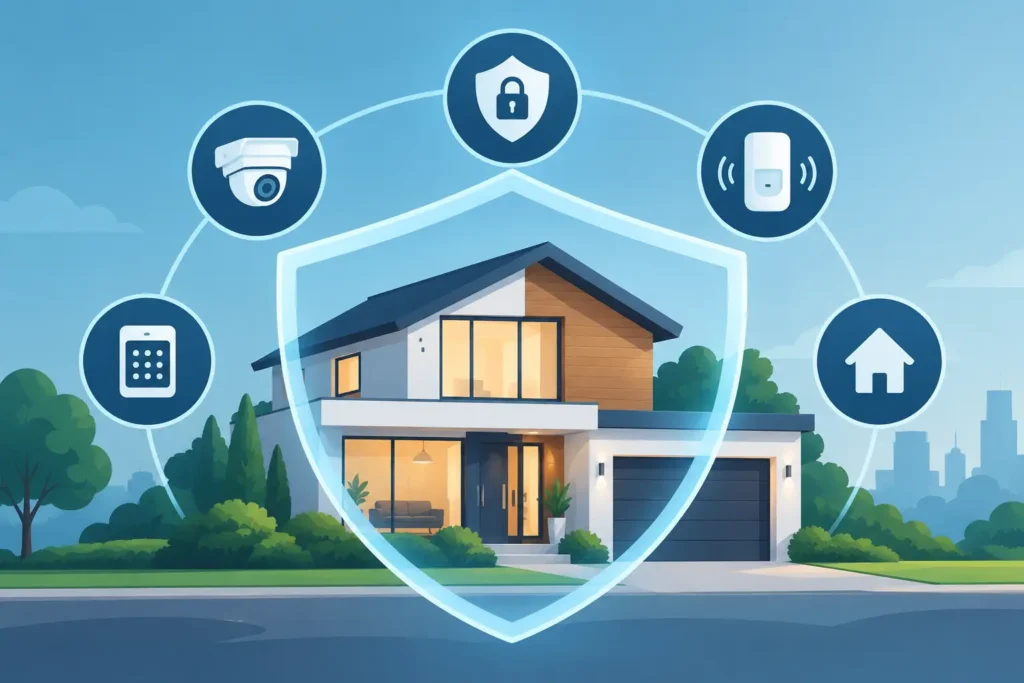
A camera over the front door, an alarm panel in the office, and a few key cards may look like security. But when those pieces operate independently, gaps appear where they matter most: after hours, during a delivery, at a side entrance, or when an employee needs help quickly. Effective security system design brings every layer together so people, property, and operations are protected with a clear plan for detection, verification, and response.
For a business owner or facilities manager, the goal is not to install the most equipment. It is to create dependable coverage that fits how the property actually operates. For a homeowner, it means knowing that alerts, video, access, and support work together when something unusual happens.
Security System Design Starts With Real Risk
The right design begins before a camera is selected or a cable is run. A professional assessment looks at the property, its routines, its vulnerabilities, and the consequences of an incident. A retail store concerned about shoplifting needs a different approach than an industrial yard managing vehicle access, valuable inventory, and overnight trespassing.
This process should identify where people enter, where they should not enter, where assets are stored, and where visibility breaks down. It should also consider daily traffic patterns. A rear door used by staff at 7 a.m. may be low risk during business hours but become a critical vulnerability after closing.
A useful assessment considers more than theft. Fire exits propped open, unauthorized access to server rooms, workplace violence concerns, vandalism, unsafe lone-worker conditions, and false alarm exposure can all influence the design. High-profile executives and organizations handling sensitive events may also need protective personnel and documented security procedures alongside electronic systems.
The result should be a practical security plan, not a generic equipment quote. It should answer a simple question: when an event occurs, how will the system detect it, who will know, and what happens next?
Build Protection in Layers
Strong protection rarely depends on one device. It uses overlapping measures so a missed detail in one area does not leave the entire property exposed. The most effective security system design often combines video surveillance, intrusion detection, access control, monitoring, and trained human response.
Video Surveillance With Purpose
Cameras should be placed to answer specific operational questions. Can the system identify a person entering a restricted door? Can management verify a cash-handling concern? Is there clear coverage of loading docks, parking areas, gates, hallways, and high-value inventory?
Camera placement matters as much as image quality. A high-definition camera mounted too high, aimed into bright sunlight, or blocked by shelving may produce video that is difficult to use. Lighting, weather exposure, network capacity, privacy expectations, and retention requirements all need consideration.
AI-powered video analytics can strengthen coverage by recognizing relevant activity, such as a person crossing a virtual boundary after hours, a vehicle entering a restricted lane, or unusual movement near an exterior door. The value is faster awareness and fewer unnecessary alerts, not replacing sound judgment. Analytics need proper configuration and periodic review because a busy public entrance and a fenced service yard require different rules.
Intrusion Alarms That Create a Response Path
Alarm systems are most valuable when they are tailored to the site. Door contacts, motion detection, glass-break sensors, panic buttons, and environmental devices can each serve a purpose, but not every location needs every sensor.
For example, a small office may prioritize perimeter protection and a monitored panic alarm. A warehouse may need layered interior detection, protected storage areas, and after-hours arming procedures that account for cleaning crews or late deliveries. The design should reduce false alarms without making the system difficult for staff to use.
24/7 monitoring turns an alarm from a local notification into an active response process. When an alarm is received, trained personnel can follow established procedures, contact designated representatives, verify available information, and coordinate an appropriate response. That matters when no one is available to watch a phone at 2 a.m.
Access Control That Supports Accountability
Keys are easy to copy, difficult to track, and often remain in circulation after an employee leaves. Access control gives organizations a more accountable way to manage doors, gates, and restricted areas.
Credentials can be assigned by person, schedule, role, or location. A manager may have access to a building at all hours, while a contractor may only enter through one door during a defined service window. If access needs to change, it can be updated without rekeying the facility.
The strongest access plans balance protection with convenience. Requiring credentials at every interior door may be appropriate for a laboratory or records area, but excessive friction can lead people to prop doors open or work around the system. The design must reflect the level of risk and the way employees need to move through the site.
Connect Technology to Human Response
Technology can alert, record, and control. People assess conditions, make decisions, and provide a visible protective presence. For many properties, the most reliable model combines both.
Remote monitoring can provide continuous oversight for critical camera views, alarms, and system health. It is particularly useful for locations that are empty overnight, spread across multiple sites, or difficult to staff around the clock. When a verified concern appears, the response can follow a predetermined escalation plan rather than relying on guesswork.
Onsite uniformed guards can add deterrence, conduct patrols, manage access points, assist visitors, document incidents, and respond to conditions that a camera alone cannot address. During sensitive events, labor disputes, construction activity, or periods of elevated risk, guard coverage can be scaled to match the situation.
Executive and VIP protection requires another level of planning. Routes, arrival points, public exposure, schedules, venue conditions, and communications need to be considered together. The objective is professional, low-profile protection that supports business continuity without creating unnecessary disruption.
Plan for Reliability, Not Just Installation Day
A security system is only useful when it works under real conditions. That means system design should include power protection, network resilience, device health monitoring, secure user management, and a clear maintenance process.
A camera that loses connection, a door reader with a failing power supply, or an alarm panel with a depleted backup battery can create a gap that remains unnoticed until an incident occurs. Proactive maintenance identifies problems before they become an emergency. It also helps ensure video is recording properly, credentials remain current, and alert settings still match the property’s operations.
Scalability matters as well. A growing company may add employees, expand into another suite, open a second facility, or introduce new hours. A system designed with future capacity can evolve without requiring a complete replacement. In many cases, starting with the highest-risk areas and building in phases is more practical than attempting to secure every possible point at once.
Define Procedures Before an Incident Happens
Even the best technology can fall short if no one knows how to use it. Written procedures should clarify who can arm and disarm systems, who receives alerts, who can review video, how access is issued and removed, and who is contacted during an emergency.
Staff training should be simple and specific. Employees need to know how to report suspicious activity, avoid defeating security features, use panic devices appropriately, and protect credentials. Managers need confidence in reviewing incident information without overcomplicating daily operations.
Documentation also supports accountability. Incident reports, access records, video retention practices, and background screening procedures can help an organization investigate concerns and demonstrate that reasonable protective measures were in place.
Choose a Partner That Sees the Whole Operation
A security provider should not treat cameras, alarms, access control, monitoring, and guarding as unrelated services. The value comes from coordinating them around the risks of the property and the people who use it.
Maritect Investigations & Security Limited approaches protection as an ongoing service, combining advanced security technology with monitoring, maintenance, protective personnel, and responsive support. That model helps clients avoid the common problem of having equipment installed without a dependable plan for what happens after an alert.
The right security system design gives you more than footage or notifications. It gives your team clear visibility, faster awareness, and confidence that there is a plan in place when the unexpected happens. Start with the areas where a single security gap would have the greatest impact, then build protection that can grow with your operation.
