

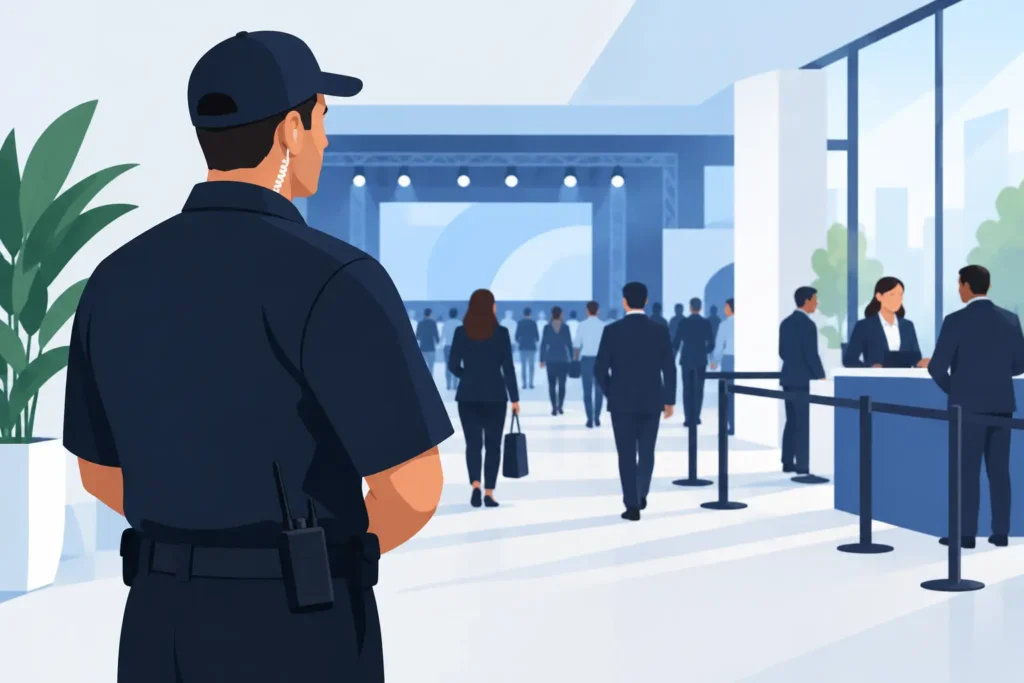
A successful event can change quickly when entry points are unmanaged, a disturbance is missed, or staff are left to handle a security concern without support. Effective event security protects people while helping the event itself stay organized, welcoming, and on schedule. It is not about making every venue feel restrictive. It is about having the right visibility, people, and response plan in place before a problem interrupts operations.
Whether you are hosting a corporate function, public festival, private gathering, retail promotion, labor-sensitive event, or high-profile appearance, the security plan should reflect the real conditions on site. Guest volume, venue layout, alcohol service, valuable equipment, public access, and the profile of attendees all affect what protection looks like.
Event Security Starts Before Doors Open
The most effective security work happens before the first guest arrives. A walkthrough of the venue can identify weak points that are easy to overlook during event planning: unsecured side doors, poorly lit parking areas, unmonitored loading zones, bottlenecks at entrances, limited emergency exits, or areas where staff cannot easily request assistance.
A proper assessment considers more than the possibility of theft or unwanted entry. It also examines how people will move through the property, where lines may form, how vendors will access the site, and what happens if weather, medical issues, traffic, or a disruptive individual changes the operating conditions.
This is where a customized approach matters. A 40-person executive dinner does not require the same security presence as a large public event. A construction-industry gathering with equipment on site may need perimeter control and overnight surveillance. A VIP appearance may require advance screening, controlled arrival routes, and close-protection personnel. The goal is to apply the right level of protection without overspending on measures that do not fit the risk.
Build the Plan Around Real Risks
A useful event security plan defines responsibilities before they become urgent. Event organizers, venue staff, security personnel, vendors, and emergency contacts should understand who makes decisions, how issues are reported, and when an incident requires escalation.
That plan should address entry and credentialing, restricted areas, parking and traffic flow, lost children or vulnerable guests, medical response, evacuation routes, suspicious activity, and post-event closing procedures. For higher-risk events, it may also include executive movement, protest activity, crowd-management thresholds, and coordination with local emergency services.
Written procedures provide accountability, but they should remain practical. A plan that is too complicated to follow during a busy arrival period will not serve the people relying on it. Clear roles and direct communication are more valuable than a binder full of generic instructions.
Control Access Without Creating Friction
Most event disruptions begin with access: someone enters where they should not, equipment leaves without authorization, or a crowded entrance prevents staff from recognizing a problem. Controlled access creates order at the point where risk is easiest to manage.
Depending on the event, this may mean visible uniformed guards, guest lists, badges, wristbands, bag checks, credential verification, or monitored gates. For private functions, a professional presence at the entrance can prevent awkward confrontations from falling to hosts or administrative staff. For larger venues, access control helps separate guests, contractors, performers, staff, and delivery personnel.
Technology can support this work without replacing professional judgment. Smart access systems, door alarms, and live video can confirm whether restricted areas remain secure. AI-powered video analytics can help identify unusual movement or activity in designated zones, allowing personnel to investigate faster rather than watching every camera feed manually.
The trade-off is important: overly aggressive screening can slow arrivals and affect the guest experience. The right approach is proportional. Use clearly marked entry points, prepare guests in advance when screening is necessary, and staff busy periods adequately so safety does not become a bottleneck.
Put People Where They Can Make a Difference
Security personnel should not simply stand near a door. Their placement should reflect the venue’s risk points and the event schedule. An officer at the primary entrance may deter unauthorized access, while another team member monitors a secondary entrance, parking area, or high-traffic corridor. Mobile patrols can cover larger properties and respond where needed.
Visible guarding is often valuable because it creates immediate reassurance for staff and guests. At the same time, some events call for a lower-profile approach. Corporate meetings, private celebrations, and executive functions may benefit from discreet personnel who remain accessible without becoming the focus of the room.
Training and demeanor matter as much as placement. Security staff need to recognize early signs of conflict, communicate calmly, document incidents accurately, and know when to request additional support. Professional de-escalation can resolve many concerns before they affect other guests or require removal from the property.
For executive and VIP events, protective services should be planned around the individual’s schedule and exposure. This can include secure transport coordination, advance venue checks, controlled access to private areas, and trained close-protection personnel. Protection should allow the client to conduct business or participate in the event with confidence, not isolate them from their audience.
Maintain Visibility Across the Entire Site
A strong onsite presence works best when backed by dependable surveillance and communications. Cameras can extend visibility to parking areas, entrances, hallways, cash-handling points, equipment storage, and exterior perimeters. Live monitoring provides an added layer of awareness when the property is large or the event continues after normal business hours.
High-definition video also creates a reliable record when an incident needs review. That can help confirm timelines, support investigations, resolve disputes, or document damage and unauthorized access. For organizations hosting recurring events, reviewing incidents and near-misses can improve future planning.
Communication is equally critical. Guards, venue managers, and organizers need a direct way to share information without creating confusion over radios, phones, or group messages. Establish simple reporting procedures and identify a central decision-maker. During an incident, scattered instructions can increase risk. A calm, coordinated response protects both people and the event’s reputation.
Remote monitoring can be particularly effective for after-hours setup, overnight equipment protection, or multi-site events. When an alarm or analytic alert is received, trained monitoring personnel can assess the situation and initiate the appropriate response. That is more effective than relying on an unmonitored camera system to provide protection after everyone has gone home.
Plan for the End of the Event
Security should remain active after the main program ends. Guests leaving at once can create congestion in parking lots and pickup areas. Staff may be handling cash, packing equipment, or securing sensitive materials when fewer people are present. Vendors and contractors may still need access while the venue is being closed.
A closing plan should identify who performs the final sweep, confirms that guests have left restricted areas, secures doors and equipment, and checks alarm and surveillance systems. For events with alcohol service or large crowds, visible personnel in exterior areas can help maintain a safe departure and discourage property damage or conflict.
Post-event reporting also matters. A concise incident report, even when no major issue occurred, gives organizers a record of concerns, actions taken, and recommendations for the next event. This information helps improve continuity, especially for venues and organizations that host frequent gatherings.
Choose a Security Partner Built for Response
Event protection is most effective when guarding, surveillance, access control, monitoring, and investigative support work together. A guard team without visibility into the parking area has limitations. Cameras without a response process have limitations. A complete program connects the technology, personnel, and procedures needed to act quickly.
Maritect Investigations & Security Limited designs security coverage around the event, property, and people involved. From trained uniformed personnel and executive protection to AI-enabled surveillance, access integration, and 24/7 monitoring, the focus is on practical protection that supports safe operations.
Your event should be remembered for its purpose, not for a preventable disruption. With the right preparation and professional response coverage, guests can focus on the experience while your team maintains control of the environment.
