

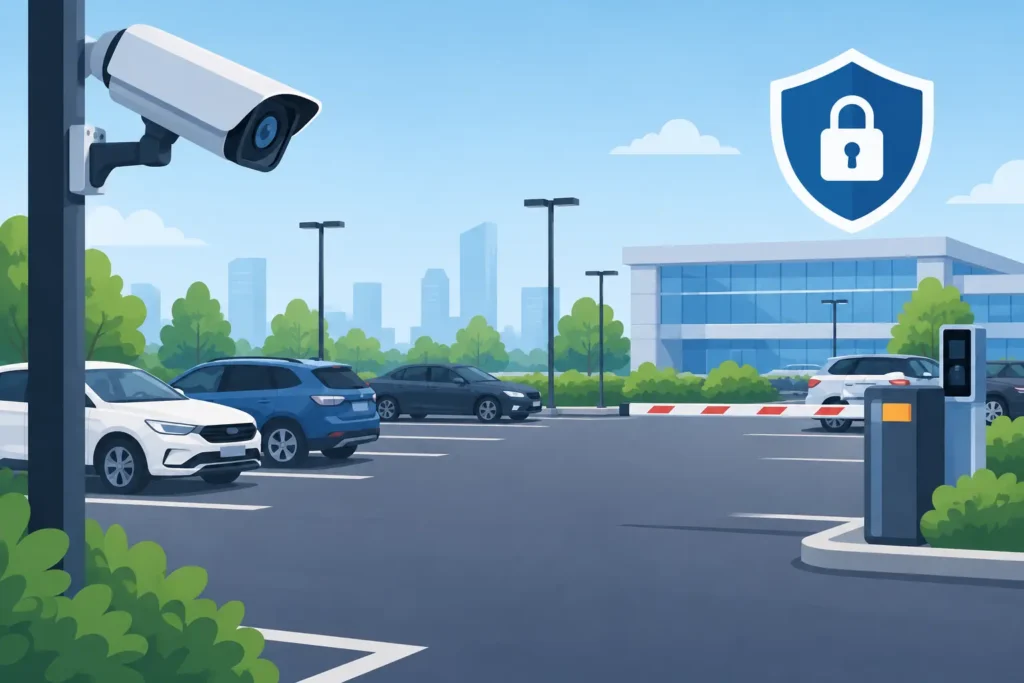
A parking lot can become a security gap long before anyone enters the building. Vehicles sit unattended, employees arrive before daylight, customers move through unfamiliar areas, and delivery activity can create open access points. The best parking lot security features give property owners clear visibility, faster incident awareness, and a practical response plan when something does not look right.
For a retail center, office complex, industrial yard, apartment community, or institution, the right setup is rarely one camera or one sign. Effective parking lot protection combines physical design, intelligent technology, and people who know what to do when an alert occurs. The goal is not simply to record an incident after the fact. It is to discourage crime, detect concerns early, and help protect people and operations.
Start With the Risks in Your Lot
A parking lot security plan should reflect how the space is actually used. A small professional office may need dependable after-hours surveillance and controlled employee access. A distribution facility may need perimeter protection, truck-area coverage, and documented activity at multiple gates. A residential property may be focused on vehicle break-ins, package theft, and resident safety at night.
Walk the property at the times when it is most vulnerable. Look for blind corners, poorly lit pedestrian paths, unmonitored entrances, damaged fencing, and places where someone could enter or leave without being seen. Also consider routine activity: shift changes, deliveries, contractor access, visitor traffic, and periods when the building is closed.
This assessment matters because adding equipment without a coverage plan can leave costly gaps. A camera pointed at the wrong area may capture movement but not a usable face, license plate, or sequence of events. Security works best when every feature supports a defined risk and response process.
Best Parking Lot Security Features That Work Together
High-quality cameras with intelligent video analytics
Visible surveillance cameras remain one of the strongest deterrents in a parking lot, but image quality and placement matter as much as camera count. High-definition cameras should cover vehicle entrances, pedestrian routes, building approaches, payment or loading areas, and known trouble spots. Cameras need sufficient nighttime performance and a field of view that supports identification, not just general observation.
AI-powered video analytics add another layer of protection. Instead of treating every motion event as equally urgent, analytics can distinguish between people, vehicles, and other movement. Rules can be set to identify activity in restricted areas, loitering near entrances, vehicles entering after hours, or a person crossing a virtual perimeter.
Analytics are not a substitute for professional judgment. Rain, shadows, wildlife, and busy traffic patterns can all affect alert accuracy. Proper configuration, testing, and regular adjustment are what turn intelligent video from a source of nuisance notifications into a useful operational tool.
Strong, even lighting
Good lighting is a security feature and a safety measure. Dark areas make people feel exposed, reduce camera effectiveness, and provide concealment for trespassing or theft. Lighting should cover drive lanes, walkways, stairwells, entrances, accessible parking spaces, dumpster areas, and the edges of the property.
The best approach is even illumination rather than a few overly bright fixtures surrounded by dark patches. Glare can create visibility problems for drivers and cameras, while poorly placed lights can cast deep shadows. Motion-activated lighting can be useful in low-traffic zones, but main pedestrian paths and active parking areas generally need consistent lighting during operating hours.
Lighting inspections should be part of routine property maintenance. A failed fixture may seem minor, but it can quickly create a vulnerable area and make recorded video less useful.
Controlled access at vehicle and pedestrian entry points
Access control helps establish who is permitted to enter, when, and through which point. Depending on the property, this may include gates, keypads, card readers, mobile credentials, intercoms, or visitor management procedures. For a gated commercial lot or industrial site, access records can also provide valuable context during an investigation.
Vehicle gates are most effective when they are matched to traffic flow. A gate that causes regular backups will be bypassed, left open, or treated as an inconvenience by staff and visitors. Emergency access, delivery schedules, snow removal, and maintenance needs must be addressed during design, not after installation.
Pedestrian gates deserve equal attention. An access-controlled vehicle entrance does little if people can walk through an unsecured side opening. Fencing, gates, signage, and access systems should work as one perimeter strategy.
License plate capture where it has a clear purpose
License plate recognition cameras can be highly valuable at controlled entrances and exits. They can help document vehicles associated with after-hours activity, support investigations, and provide a searchable record when a specific vehicle is involved in an incident.
This feature is especially useful for properties with recurring unauthorized parking, restricted vehicle access, high-value inventory, or frequent deliveries. It does require careful design. A standard overview camera is not always suitable for capturing readable plates, particularly at night or when vehicles move quickly. Dedicated placement, proper angles, and appropriate lighting make the difference.
Property owners should also establish clear policies for how plate data is retained, accessed, and used. Security records should support legitimate operational and investigative needs while being handled responsibly.
24/7 remote monitoring and active response
Recording video is valuable after an incident. Live monitoring can help change what happens during one. When trained operators receive a verified alert, they can assess the situation, follow site-specific procedures, issue an audio warning where appropriate, contact keyholders, or request emergency response when necessary.
Remote monitoring is particularly useful for properties that are empty overnight, have large outdoor areas, or cannot justify a full-time onsite guard. It creates a watchful presence without relying on someone to manually check cameras around the clock.
The response plan must be tailored to the site. A suspected trespasser at a closed warehouse, an altercation outside a busy venue, and an employee arriving alone before a morning shift require different actions. Clear escalation instructions, current contact information, and regular system testing are essential.
Visible signage and emergency communication
Security signage can reinforce that surveillance and access controls are in place. It will not stop every offender, but it can increase perceived risk and make expectations clear for visitors, employees, and contractors. Signs should be readable, placed at relevant entrances, and supported by real security measures.
Emergency call stations, intercoms, and mobile-based assistance options may also be appropriate for larger lots, healthcare facilities, campuses, and residential communities. These tools give people a direct way to request help when they feel unsafe or need immediate assistance.
Their usefulness depends on maintenance and response. A call box that is difficult to locate, out of service, or not tied to a reliable response process can create false confidence. Test communication features as consistently as alarms and cameras.
Onsite guard coverage for higher-risk periods
Some locations benefit from a uniformed security presence, especially during special events, overnight operations, shift changes, labor disruptions, or periods of increased theft. Guards provide deterrence, conduct patrols, check doors and gates, assist visitors, document concerns, and respond to issues that technology alone cannot resolve.
Onsite coverage is not necessary for every parking lot. It is most effective when used strategically, such as during closing hours at a retail site or at a facility with repeated perimeter incidents. Guard patrols should have defined routes, reporting expectations, communication tools, and direct coordination with monitoring staff or site management.
Design for Safety, Not Just Surveillance
The strongest parking lot plans also use environmental design. Trim landscaping that blocks sightlines. Keep dumpsters, storage containers, and parked equipment from creating hiding places near entrances. Mark pedestrian routes clearly, maintain pavement and curbs, and ensure visitors know where to park and enter.
These details affect security because uncertainty creates opportunity. When people can move through a property unseen or appear to belong without challenge, unauthorized activity is harder to spot. A clean, organized, well-maintained lot communicates that the property is actively managed.
Maintenance should include camera cleaning, recording checks, lighting inspections, gate testing, alarm verification, and review of any recurring trouble areas. Security systems cannot protect a space reliably if they are allowed to degrade unnoticed.
Build a Response Plan Before an Incident
A parking lot security system is only as effective as the people and procedures behind it. Identify who receives alerts, who can access video, when law enforcement should be contacted, and how employees should report suspicious behavior. Staff should know that they are not expected to confront a trespasser or intervene in a dangerous situation.
Document incidents consistently, even when the damage appears minor. Patterns often become visible only after several reports: a repeated vehicle, a particular time window, an unsecured gate, or a location that needs better lighting. Those details help security providers and property managers refine coverage before a more serious event occurs.
The right parking lot security features create confidence without making a property feel unwelcoming. Start with the areas where people and assets are most exposed, then build a connected system that can see, verify, alert, and respond. A well-protected lot sends a clear message: this property is watched, maintained, and ready.
