

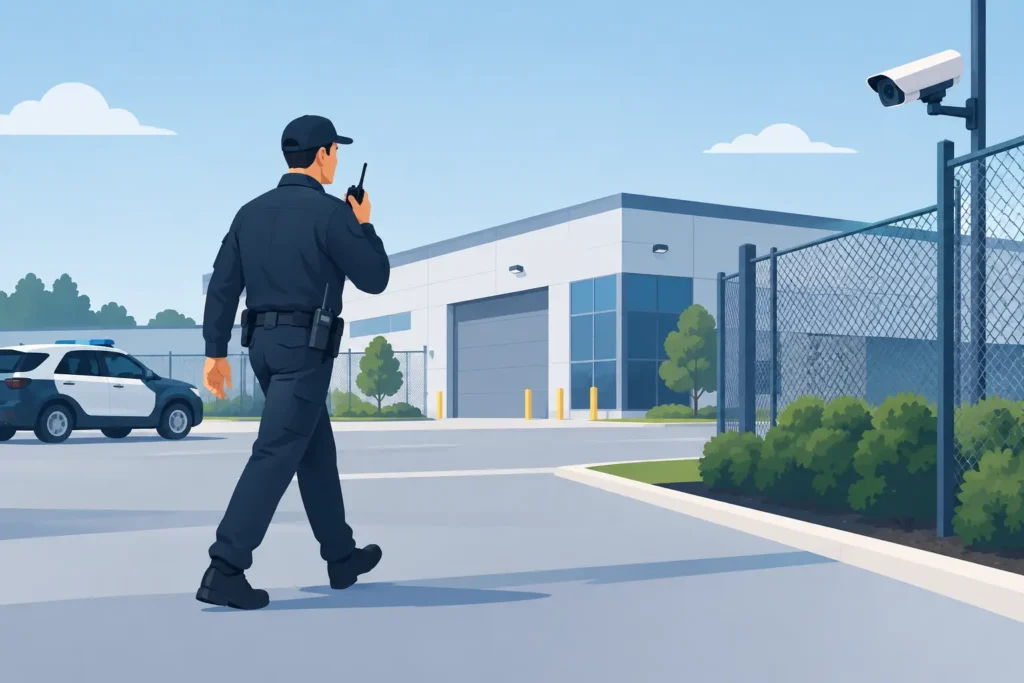
A loading door left unsecured after closing. A visitor wandering into a restricted hallway. A vehicle circling a parking lot long after staff have gone home. These are the moments when security patrols make a practical difference. A trained officer on site can assess what is happening, take the right action, and document the event before a small concern becomes a disruption, loss, or safety issue.
For property owners, business operators, and facilities managers, patrol coverage is not simply about having a visible uniform at the entrance. It is about maintaining control of a site when operations are busy, staffing is thin, or the property is most vulnerable. The right patrol program brings consistent presence, clear procedures, rapid communication, and reliable accountability to the places that matter most.
What Security Patrols Are Designed to Do
Security patrols are planned, professional rounds through a property or designated area. They may be conducted on foot, by vehicle, or through a combination of both, depending on the size and layout of the site. Officers check access points, doors, gates, parking areas, common spaces, equipment yards, perimeter fencing, and other locations identified in the security plan.
The visible presence of a uniformed officer can discourage trespassing, theft, vandalism, and unauthorized activity. Just as important, patrol officers observe conditions that cameras or alarms may not fully explain. A door may be propped open for a legitimate delivery, or it may signal an access-control failure. A person on site may be a contractor, a confused visitor, or someone attempting to gain entry without authorization. Human judgment helps distinguish between activity and risk.
A patrol officer can also respond to practical site issues, such as checking an alarm condition, meeting emergency services, securing a damaged entry point, or carrying out scheduled opening and closing duties. For many organizations, this support protects more than physical assets. It helps keep employees, tenants, customers, and operations moving with less uncertainty.
Where Patrol Coverage Delivers the Most Value
Patrols are flexible because they can be tailored to a property’s actual exposure rather than applied as a one-size-fits-all service. A retail location may need evening parking-lot checks and a visible presence during peak customer hours. An industrial facility may need overnight perimeter inspections, gate verification, and documented checks of high-value equipment. An office building may require unlock and lock services, visitor support, and after-hours alarm response.
Residential communities and multi-unit properties can benefit from regular checks of garages, common areas, exterior doors, and parcel spaces. Institutions may need officers who understand access restrictions, incident reporting, and the importance of a calm, professional approach around staff and visitors. During labor disputes, construction projects, special events, or executive travel, patrol coverage can be adjusted quickly to address a temporary increase in risk.
The schedule matters as much as the location. Some sites need a dedicated officer throughout the day or night. Others are better served by mobile patrols that arrive at varied times, complete specific inspections, and provide a dependable response presence. The right choice depends on the property’s size, hours, incident history, asset value, and the consequences of a delayed response.
Effective Patrols Follow a Clear Operating Plan
A security officer should never be asked to simply “walk around and keep an eye out.” Effective coverage starts with defined expectations. Before a patrol program begins, the provider should understand the site layout, access points, daily routines, known concerns, emergency contacts, and rules for escalation.
A useful patrol plan identifies what must be checked, how often it must be checked, and what an officer should do when something is not right. That may include confirming that exterior doors are secured, inspecting a fence line, challenging unauthorized individuals in a professional manner, or contacting a designated manager when a critical issue is found.
Documentation is central to accountability. Officers should record completed patrols, incidents, observations, and actions taken. Time-stamped reports give management a clear record of activity and help reveal patterns over time. Repeated door alarms, recurring loitering, or frequent damage in one area may point to a larger weakness that needs to be addressed through lighting, access control, camera placement, or changes to site procedures.
A strong patrol program also defines communication. Site contacts need to know who will be called, when they will be contacted, and what information they can expect. If an officer finds a serious concern at 2:00 a.m., uncertainty about who has authority to act can create unnecessary delay.
Patrol Officers and Security Technology Work Better Together
Patrol services are most effective when they support an integrated security program. Cameras, alarms, access control, remote monitoring, and officers each serve different purposes. Used together, they provide stronger awareness and faster response.
AI-enabled video analytics can identify activity in a restricted zone or alert monitoring personnel to a person or vehicle after hours. Remote monitoring can verify an alarm event and guide the response. A patrol officer can then attend the site, inspect conditions in person, secure the area, and provide a documented report. This layered approach reduces guesswork and helps avoid dispatching an officer for every noncritical alert while ensuring genuine concerns receive attention.
Technology does not replace patrol officers in every situation. Cameras cannot lock a damaged door, safely approach an individual, meet police or fire personnel, or make a judgment call based on conditions across a property. At the same time, officers should not have to rely on routine walking alone when monitored alarms and video can direct them to the area that needs attention. The best programs use technology to make human response more informed and effective.
Choosing the Right Type of Patrol Service
The right level of coverage depends on risk, not just budget. A low-traffic office with reliable access control may only need scheduled checks and alarm response outside business hours. A site with repeated theft, isolated buildings, open public access, or valuable inventory may require frequent patrols or a dedicated guard.
Consider these questions when planning coverage:
- When is the property least occupied or least visible to staff?
- Which areas have experienced theft, trespassing, damage, or repeated alarms?
- What would an after-hours incident cost in downtime, liability, or lost assets?
- Can current cameras, alarms, and access controls provide useful information to responding officers?
- Who is authorized to make decisions if an incident occurs?
There are trade-offs. A dedicated officer offers immediate, continuous presence but is a larger investment. Mobile patrols offer broad coverage at a more efficient cost for sites that do not need someone stationed there at all times. Randomized patrol timing can make it harder for unwanted visitors to predict coverage, while fixed rounds may be better when tenants or operations rely on consistent opening, closing, or access checks. A professional assessment should match these choices to actual conditions on site.
What Professional Conduct Looks Like on Patrol
The quality of patrol service is measured in more than the number of rounds completed. Officers represent the property while interacting with employees, customers, tenants, contractors, and the public. They need to be observant without being disruptive, approachable without losing authority, and prepared to act within clearly defined procedures.
Professional conduct includes clear reporting, appropriate de-escalation, respect for privacy, and prompt escalation when police, fire, medical, or management support is needed. It also means recognizing the limits of the role. An officer should not take unnecessary risks or attempt to handle a situation beyond their training. Good security is controlled, measured, and responsive.
For high-risk environments or sensitive assignments, officer selection and briefing matter even more. Executive protection, labor-dispute support, and sites handling confidential information may require specialized experience, stricter access protocols, and closer coordination with the client’s leadership team.
Build Patrol Coverage Around Your Real Risks
Security patrols should not be selected from a menu without first understanding the property. The most dependable programs begin with a walkthrough, a review of existing technology, and a practical conversation about what happens after hours, during emergencies, and when normal routines change.
Maritect Investigations & Security Limited combines trained protective services with surveillance, alarms, access integration, and 24/7 monitoring so clients can build coverage that fits the way their property actually operates. Whether the need is routine mobile checks, a uniformed officer, alarm response, or support during a sensitive event, the goal is the same: faster awareness, reliable action, and a site that remains under control.
A useful next step is to identify the one moment your property is hardest to protect – the shift change, the overnight hours, the open gate, or the unstaffed building. That moment is often the best place to start building a patrol plan.
