

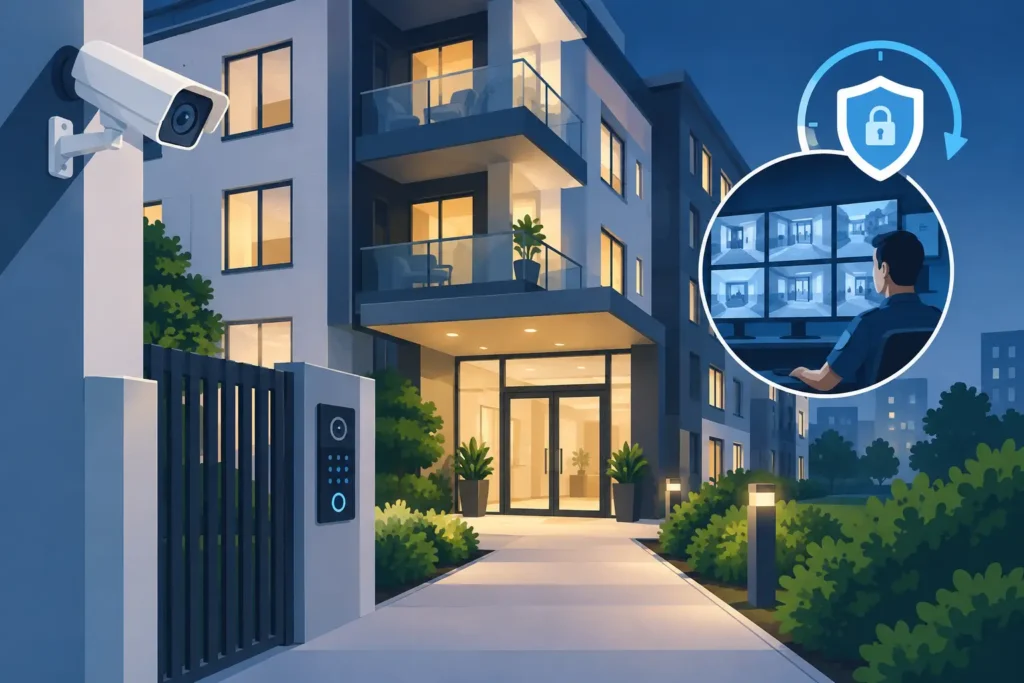
A package left in an unsecured lobby, a propped-open rear door, or a stranger following a resident through a controlled entrance can become a serious issue in minutes. Effective apartment building security is not one camera over the front door. It is a coordinated system that gives property teams visibility, control, and a clear response when something does not look right.
For owners and property managers, the goal is practical: help residents feel safe, reduce theft and vandalism, protect common areas, and document incidents without turning the property into an inconvenient or intimidating place to live. The right approach depends on the building layout, resident turnover, neighborhood risks, staffing model, and budget. What should not change is the need for reliable coverage after office hours.
Start With the Building’s Real Risks
Security planning works best when it begins with a walkthrough, not a product list. A 12-unit walk-up has different exposures than a multi-building community with parking garages, elevators, fitness rooms, package areas, and onsite staff. Cameras and access systems should address the places where unauthorized entry, theft, conflicts, and property damage are most likely to occur.
Look closely at every way people enter and leave the property. Front entrances may have good visibility during business hours but become vulnerable when deliveries, resident traffic, or a malfunctioning door prevents controlled access. Side and rear doors are often less visible. Garage gates, stairwells, laundry rooms, storage lockers, rooftops, and mechanical rooms can also create blind spots.
Incident history matters, but it should not be the only measure. A building may have few reports simply because residents do not know how to report concerns or because there is no usable video evidence. Staff observations, maintenance records, tenant feedback, and police reports can help identify patterns before they become larger losses.
Control Access Without Creating Friction
Access control is the foundation of apartment building security. A physical key is easy to copy, hard to track, and expensive to replace when a resident moves out. Electronic credentials, fobs, cards, mobile access, or managed keypad codes give property management greater control over who can enter and when.
A well-designed system can separate resident access from staff, contractors, cleaners, and temporary vendors. Credentials can be limited to the doors and hours each person genuinely needs. When a resident leaves or a contractor’s work is complete, access can be removed without rekeying an entire building.
The trade-off is convenience. Residents expect access to work consistently, especially during evenings, bad weather, or emergencies. Systems need dependable hardware, battery backup where appropriate, and clear procedures for lockouts and lost credentials. A secure door that fails repeatedly will eventually be bypassed by residents, which defeats the purpose.
Visitor management also deserves attention. Video intercoms can allow residents to verify visitors before granting entry, while delivery procedures can reduce the pressure to leave doors unlocked or packages unattended. In larger buildings, a designated package room or secure locker area can be more effective than asking front-office staff to manage every delivery.
Do Not Overlook Door Condition
Technology cannot compensate for a door that does not close or latch properly. Door closers, strike plates, hinges, frames, locks, and weather-related wear should be inspected routinely. A monitored door-prop alert can be useful at high-risk entrances, but it must be paired with a person or process that responds. Repeated alerts with no follow-up quickly become background noise.
Use Video as an Active Security Tool
Visible cameras can discourage opportunistic misconduct, but their main value is accountability. Clear video can help management verify incidents, resolve disputes, support investigations, and identify recurring problems such as tailgating, dumping, vandalism, or unauthorized use of amenities.
Camera placement matters more than camera quantity. Priority areas commonly include exterior approaches, entrances and exits, mail and package areas, lobbies, elevators, parking lots, garages, loading areas, and common spaces. Cameras should capture useful angles at the point of entry, not merely a wide view of the surrounding area. Lighting, mounting height, glare, and nighttime performance all affect whether footage is actually usable.
AI-powered video analytics can make large systems more manageable. Instead of requiring someone to watch every camera feed, analytics can flag events such as a person entering a restricted zone, a vehicle lingering after hours, or movement at a closed amenity area. The benefit is faster awareness. The limitation is that analytics need proper setup and ongoing adjustment to reduce false alerts caused by weather, animals, shadows, or normal resident activity.
Remote monitoring adds another layer of protection. Trained operators can review verified events and follow an established response protocol, whether that means contacting a property representative, issuing an audio warning, dispatching a guard, or requesting emergency services when appropriate. This is especially valuable for properties without overnight staff. Recording an incident is helpful; recognizing it while it is happening may prevent further damage.
Connect Alarms, Cameras, and Response Plans
Separate systems create separate gaps. An alarm that activates without video verification may produce uncertainty. Cameras that record a forced entry without an alarm may not trigger a timely response. Integrating intrusion alarms, access control, surveillance, and monitoring gives property teams a clearer picture of what is happening.
For example, an after-hours door alarm can prompt a camera review of the entrance. A forced opening at a maintenance room can trigger an alert to a designated contact and provide video evidence of the event. A garage gate left open can be identified before it becomes an all-night access point.
Every alert needs an owner. Property managers should decide in advance who receives notifications, what events require immediate escalation, and when police, fire, maintenance, or a security officer should be contacted. This plan should account for holidays, staffing changes, and after-hours incidents. A call list that has not been updated in two years is not a response plan.
Add Human Coverage Where It Has the Most Value
Not every apartment property needs a full-time guard. In some cases, scheduled patrols, mobile checks, or short-term coverage during construction, move-ins, renovations, or a known security concern may be the better fit. A uniformed presence can deter unauthorized activity, provide resident reassurance, and help enforce property rules in high-traffic areas.
Human coverage is most effective when the officer understands the site’s procedures. Guards should know which areas require checks, how to document incidents, who to contact, and when an issue should be escalated. They should also understand the limits of their role. Security staff can observe, report, deter, and respond according to protocol, but medical emergencies, fires, and active threats require immediate coordination with emergency services.
For many properties, a combination of monitored technology and targeted guard services provides better coverage than relying on either one alone. Technology supports continuous visibility. Personnel bring judgment, presence, and direct action when circumstances call for it.
Protect Privacy and Build Resident Trust
Residents are more likely to support security measures when they understand their purpose. Communicate where cameras are located, how access credentials are managed, and how residents should report lost fobs, suspicious activity, or damaged doors. Security policies should be consistent, practical, and applied fairly.
Cameras belong in common and public-facing areas, not in spaces where residents reasonably expect privacy. Footage access should be limited to authorized personnel, with retention practices that match the property’s needs and applicable requirements. This protects residents while preserving the integrity of evidence when an incident occurs.
Maintenance is part of trust, too. A camera with a dirty lens, an intercom that does not connect, or an access reader that fails on a cold night sends the wrong message. Routine testing, software updates, backup power checks, and prompt repairs keep the system dependable.
Maritect Investigations & Security Limited designs integrated programs around the realities of each property, combining surveillance, access control, alarms, monitoring, and protective services where they provide the greatest value. The objective is not to install more equipment than a building needs. It is to create dependable awareness and a response path that works when the office is closed.
Residents notice the small signals of a well-protected building: doors that close properly, common areas that are monitored, lighting that works, and staff who know what to do when an issue is reported. Those details create confidence long before a serious incident tests the system.
