

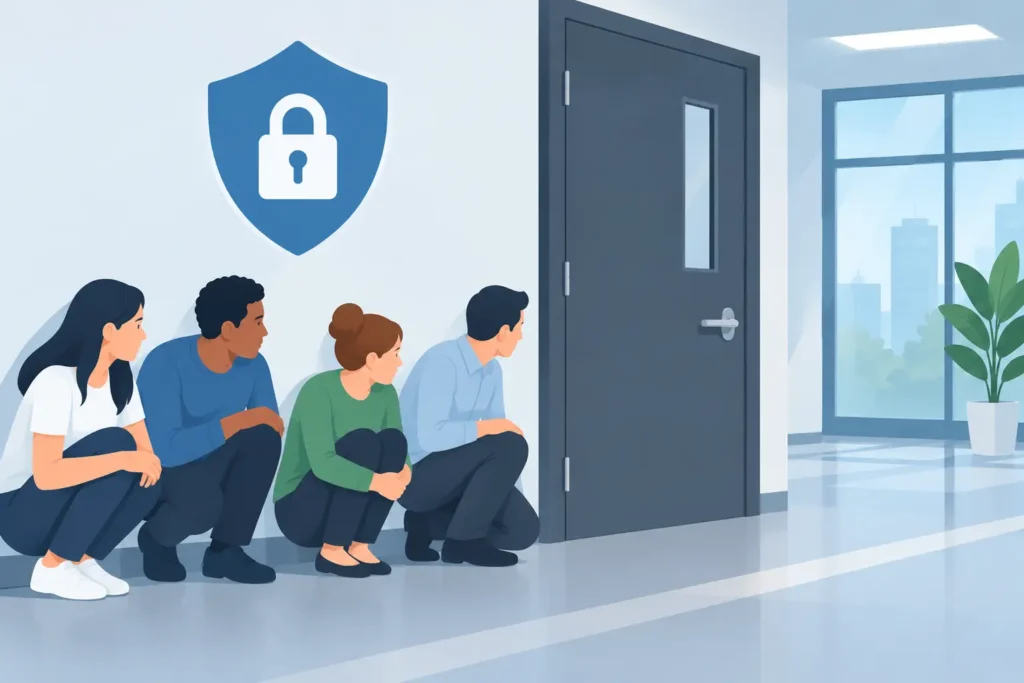
A lockdown is not a test of bravery. It is a coordinated way to reduce exposure, control movement, and give first responders the clearest possible picture of what is happening. Effective emergency lockdown procedures help employees, residents, visitors, and security teams make safe decisions quickly when there is a credible threat inside or near a property.
For a retail store, office, school, industrial site, or residential building, the right response will not look identical. The building layout, occupants, operating hours, public access points, and available security resources all matter. What should remain consistent is a clear plan: recognize the threat, communicate the instruction, secure people and access points, and maintain accountability until authorities or designated leadership provide an all-clear.
What an Emergency Lockdown Is Designed to Do
A lockdown is used when moving people through hallways, parking lots, or public exits could increase their risk. The immediate goal is to limit access to occupied areas and place people behind secure barriers while emergency services assess the situation.
This may be necessary during an active threat, a violent incident nearby, an intruder report, a dangerous confrontation, or another situation where there is an immediate concern for personal safety. A lockdown is not the same as a fire evacuation, shelter-in-place order, or severe-weather response. Those actions have different objectives, which is why staff need plain-language instructions rather than a one-size-fits-all alarm response.
The best procedure does not rely on employees remembering a lengthy manual under stress. It gives them simple actions, identifies who is responsible for communication and coordination, and accounts for people who may need assistance.
Build Emergency Lockdown Procedures Around Your Site
A generic policy may satisfy a paperwork requirement, but it can leave major gaps during a real incident. Begin with a site assessment that identifies how people enter, move through, and exit the property. Consider reception areas, loading doors, stairwells, elevators, shared corridors, exterior gathering areas, cash-handling locations, server rooms, and any spaces that cannot be secured from the inside.
Access control is central to this process. Doors that are normally convenient for staff and visitors can become vulnerabilities if they cannot be secured quickly. Electronic locks, credentialed access, door-position monitoring, and properly maintained hardware can help teams control entry without creating new life-safety issues. Every locking arrangement must also comply with applicable fire, building, and accessibility requirements. A door that protects occupants during a threat must still allow safe emergency egress.
Camera coverage provides another layer of operational awareness. High-definition CCTV and AI-enabled video analytics can help verify whether a restricted door has opened, identify movement in a monitored area, and provide security personnel with real-time information. Technology supports the response, but it does not replace judgment. Someone must be assigned to evaluate alerts, communicate clearly, and avoid sharing unverified information.
Define who can initiate a lockdown
Staff should not hesitate because they are unsure who has authority to act. Establish the roles that can initiate a lockdown, such as a site manager, security supervisor, remote monitoring operator, or designated employee. At the same time, make clear that anyone who observes an immediate threat should contact emergency services without delay.
The activation method should be simple and reliable. Depending on the property, it may include a panic button, monitored alarm input, mobile alert, public-address announcement, mass notification platform, or direct instruction from security. Redundancy matters. If one system fails or a person cannot safely reach it, there should be another way to communicate the instruction.
Use clear, plain-language messaging
Vague messages create confusion. A lockdown message should state what action people need to take and avoid speculation about the source or severity of the threat. For example: “Lockdown. Move to the nearest secure room, lock or barricade the door if safe, remain quiet, and wait for further instructions.”
Messages should also be accessible to the people on site. Consider visual alerts for noisy industrial environments, accessible communication for people with hearing or vision impairments, and procedures for visitors who may not know the building. For public-facing locations, employees may need guidance on how to protect customers without exposing themselves to additional risk.
The First Minutes: Priorities for Staff and Security
During a lockdown, time and clarity are more valuable than perfect information. Employees should follow the training they have received, make decisions based on immediate conditions, and avoid moving toward a suspected threat to investigate.
Where it is safe to do so, occupants should move out of view, secure the room, silence phones and other devices, keep noise low, and stay away from windows and doors. They should not open a secured door for an unidentified person, even if they hear someone outside. Emergency responders will have established methods for identifying themselves and directing occupants when it is safe to move.
Security personnel have additional responsibilities, but their role must be defined in advance. They may monitor cameras, secure access points where safe, meet responding authorities, preserve incident information, and support communications. They should not be expected to confront a dangerous person unless that function is expressly within their training, authority, equipment, and operational plan.
A monitored security environment can reduce delays in this critical period. Remote operators can review live video, receive alarm events, document key timestamps, and escalate to designated contacts or emergency services according to the site’s response protocol. This is especially valuable for facilities that are unoccupied overnight, spread across multiple buildings, or unable to staff a security desk around the clock.
Train for Calm, Not Panic
A written procedure only works when people know what it means in practice. Training should be brief, recurring, and relevant to each team’s daily environment. Reception staff, warehouse employees, managers, contractors, and overnight crews may all face different conditions and need different instructions.
Drills are useful when they are planned carefully. The purpose is not to create fear or catch people making mistakes. It is to identify unclear instructions, doors that do not secure properly, communication dead zones, and accountability problems before a real event exposes them. Notify the appropriate people in advance, including local emergency services when required, and avoid simulations that could cause unnecessary alarm or trauma.
After each exercise, ask practical questions. Did everyone receive the message? Could rooms be secured? Did staff know where to go? Were visitors accounted for? Did cameras, alarms, radios, and access controls perform as expected? Corrective actions should have an owner and a deadline. A drill without follow-through becomes a routine, not a readiness measure.
Accountability and the All-Clear
Once people are secured, leadership needs a reliable way to account for employees, visitors, residents, or students without encouraging unsafe movement. Depending on the setting, this may involve department rosters, visitor-management records, access-control reports, or communication through designated room leads. Accountability information should be shared with responders when requested, but privacy and accuracy still matter. Do not circulate names or personal details broadly through informal messages.
Only authorized responders or a clearly designated incident leader should issue the all-clear. Employees should understand that a quiet hallway, an unanswered phone, or a message from an unverified source does not end a lockdown. Premature movement can create further risk and complicate the emergency response.
When the incident is over, preserve relevant footage, alarm logs, access events, and incident notes. These records can support law enforcement, insurance reporting, internal review, and improvements to the security plan. They also provide a factual timeline when emotions and memories are understandably unsettled.
Keep the Plan Current as Your Property Changes
Emergency lockdown procedures should be reviewed after an incident, drill, renovation, staffing change, or security-system upgrade. A new tenant, redesigned reception area, added loading dock, or changed shift schedule can alter the way a property needs to respond.
Maritect Investigations & Security Limited helps organizations align security technology, monitored response, access control, and onsite protective services with the realities of their operations. The right plan is not the one with the most equipment or the longest policy. It is the one your people can follow with confidence when every second counts.
A secure property is built before an emergency begins: with maintained doors, tested communications, trained people, and a response plan that is clear enough to use under pressure.
