

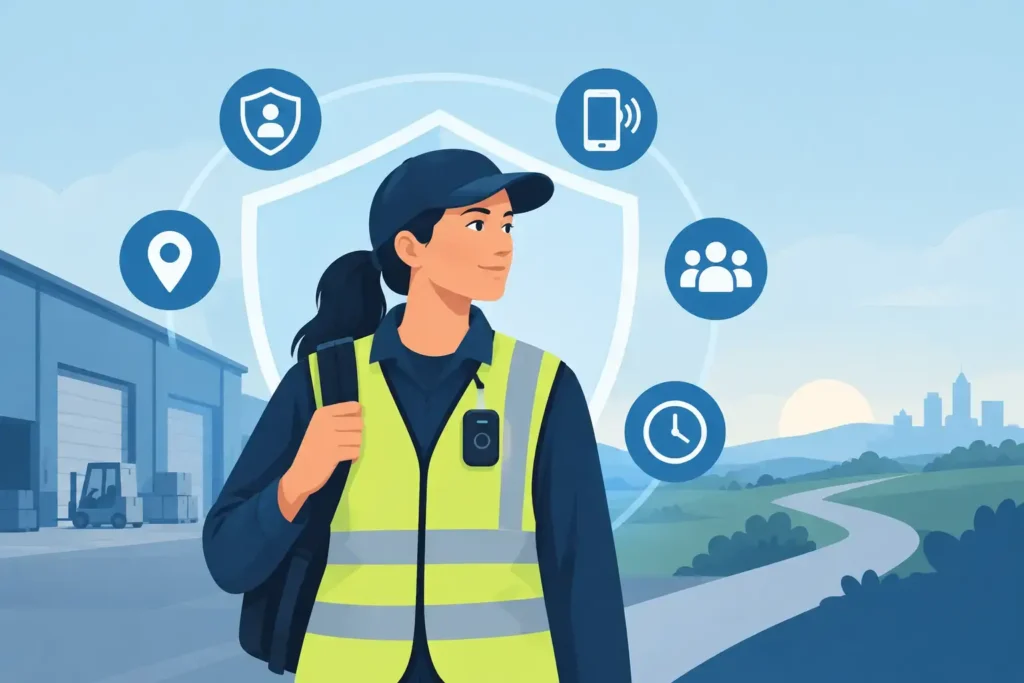
The risk often begins after everyone else has gone home. A maintenance technician enters a quiet building, a property manager responds to an after-hours alarm, or a retail employee locks up alone. Knowing how to protect lone workers means planning for the moment a routine task becomes an emergency and no coworker is nearby to notice.
Lone work is not automatically unsafe. Many organizations depend on employees who work independently, travel between sites, handle opening and closing duties, or respond after hours. The real concern is whether the organization can identify risk early, maintain contact, and send the right help without delay.
How to Protect Lone Workers Starts With the Work Itself
A strong lone-worker program begins with a task-specific risk assessment, not a generic policy. The hazards facing a night cleaner in an office tower differ from those facing a service technician at a remote industrial site. Review where the work happens, when it happens, who may be present, and what could prevent a worker from calling for help.
Consider the full shift, including travel, arrival, entry, work areas, breaks, closing procedures, and departure. A worker may be safe inside a monitored facility but exposed in a poorly lit parking lot. A technician may be comfortable during normal operations but face elevated risk when working around energized equipment or entering a vacant property after dark.
Assess common sources of risk such as:
- Violence, harassment, trespassing, or confrontational visitors
- Slips, falls, medical events, and hazardous equipment
- Isolated locations, poor cell coverage, and delayed emergency access
- Cash handling, valuable inventory, keys, access credentials, or sensitive records
- Severe weather, vehicle breakdowns, and travel between sites
Talk directly with the people doing the work. They can identify blind corners, unreliable check-in points, recurring problem locations, and situations that may not appear in incident reports. Their feedback should shape the controls you put in place.
Set Clear Rules for Check-Ins and Escalation
A lone worker should never have to guess when to check in, whom to contact, or what happens if they miss a scheduled confirmation. Establish a check-in process that is simple enough to follow during a busy shift and specific enough to trigger action when something is wrong.
For lower-risk work, a start-of-shift, mid-shift, and end-of-shift check-in may be appropriate. Higher-risk assignments may require scheduled location-based check-ins, active supervision, or continuous monitoring. The right frequency depends on the task, location, and potential consequences of a missed contact.
Just as important, define the escalation path. If a worker does not respond, the first step may be a call or text. If there is still no response, a supervisor or monitoring center should verify the situation through available cameras, access activity, or a site contact. Where risk is immediate or evidence suggests distress, the response plan should include dispatching trained personnel or contacting emergency services.
Document these procedures and test them. A plan that exists only in a handbook will not protect anyone at 11:30 p.m. when a check-in is missed.
Give Workers a Reliable Way to Call for Help
A standard phone is useful, but it is not always enough. A worker may drop it, be unable to speak, lack service, or be too distressed to explain what is happening. Lone-worker protection should include more than one way to raise an alarm.
Depending on the environment, this may include a monitored panic button, wearable duress device, mobile safety application, radio, fixed emergency call station, or an alarm panel with a clearly marked emergency feature. For workers who enter isolated or higher-risk areas, devices with location sharing, fall detection, or missed check-in alerts can reduce the time between an incident and a response.
Technology should match the real conditions at the site. A mobile app may work well for a property manager moving between urban locations. A worker in an area with weak cellular coverage may need a radio-based solution or another communication method. The goal is dependable contact, not adding technology for its own sake.
Train employees to use every device under realistic conditions. They should know how to activate a duress alert discreetly, what information responders can see, and what to do if their primary device fails. Equipment also needs regular testing, battery checks, and maintenance. An emergency device that has not been charged or tested is a false sense of security.
Build Safety Into the Site
Physical security controls make independent work safer by reducing avoidable exposure. Good lighting, controlled access, visible surveillance, secure doors, and clearly marked exits help workers identify problems and leave safely when necessary.
For commercial buildings, warehouses, retail locations, and multi-unit properties, review access after normal business hours. Limit entry to authorized personnel, remove outdated access credentials promptly, and make sure employees do not have to prop open doors while carrying out routine tasks. If contractors or delivery personnel need access, create a controlled process instead of relying on informal arrangements.
Cameras also provide a practical layer of support. Well-positioned video surveillance can help verify who is approaching an entrance, identify activity in parking areas, and provide situational awareness during an alarm or missed check-in. AI-enabled video analytics can be useful at larger or busier sites by flagging unusual movement in restricted areas, but it should support human judgment rather than replace it.
Remote monitoring is especially valuable when a site is unoccupied or lightly staffed. A monitoring team can assess alarm activity, review relevant video, follow established escalation instructions, and maintain a documented record of the event. This gives lone workers a defined support channel rather than leaving them to manage a developing situation alone.
Train for Decisions, Not Just Compliance
Training should prepare lone workers to make calm, practical decisions. They need to know which situations require them to leave immediately, when to call for help, and when they should not attempt to intervene.
For example, an employee who finds an unknown person inside a closed facility should not investigate alone. A worker responding to a triggered alarm should understand whether their role is to observe from a safe position, verify access remotely, contact the monitoring provider, or wait for trained security personnel. Clear boundaries prevent well-intentioned employees from taking unnecessary risks.
Use realistic scenarios in training: a missed check-in, an aggressive visitor, a medical emergency, a vehicle breakdown, a suspicious person in the parking lot, or a door found unsecured. Practice the communication steps and escalation sequence. Short refresher sessions are often more effective than a single annual presentation, especially for employees whose lone-work duties occur only occasionally.
Supervisors also need training. They must respond consistently when workers report concerns, missed check-ins, equipment faults, or changes in site conditions. Dismissing a concern because no incident occurred can discourage future reporting and leave hazards unresolved.
Keep Procedures Current as Conditions Change
Lone-worker risk is not fixed. Staffing levels change, facilities expand, hours shift, and a site that was once quiet may experience repeated trespassing, theft, or conflict. Review the program after any incident, near miss, facility change, or employee feedback that points to a gap.
Track missed check-ins, alarm activations, access issues, equipment failures, and reported safety concerns. These records reveal patterns that are easy to miss when incidents are viewed one at a time. If a particular entrance repeatedly creates concern, improve lighting, adjust camera coverage, change the access procedure, or schedule support during the affected hours.
A customized approach is usually more effective than a one-size-fits-all policy. Maritect Investigations & Security Limited helps organizations combine site assessments, surveillance, alarm systems, remote monitoring, and trained protective services into practical coverage plans. The right mix depends on the worker, the work, and the risks present at each location.
The most effective protection is felt before an emergency occurs: a worker knows the route out, the check-in is expected, the alert reaches someone who can act, and help is already part of the plan. That confidence lets people focus on their work while your organization remains ready to protect them.
