

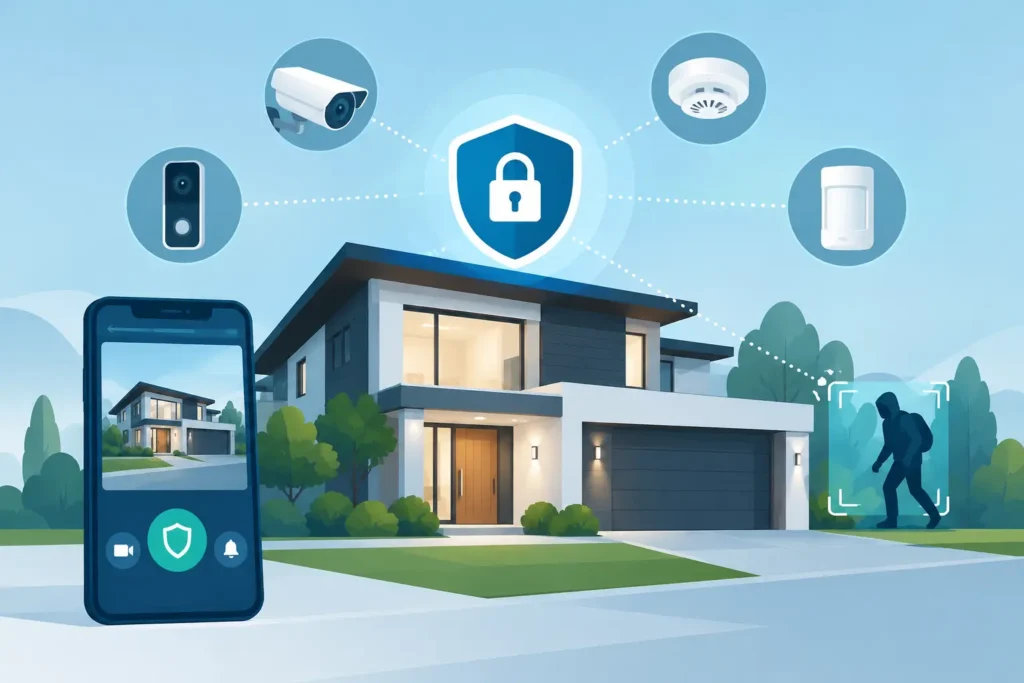
A camera that records an incident after the fact is useful. A system that recognizes suspicious activity, checks who entered a restricted area, alerts a monitoring team, and supports a measured response can change the outcome. That is the practical value of integrated smart security systems for property owners, businesses, and institutions that need more than disconnected devices.
Security is not one product. It is an operating plan that combines technology, people, procedures, and clear accountability. When those elements work together, decision-makers gain faster awareness of what is happening at their site and a reliable record of how it was handled.
What Integrated Smart Security Systems Connect
An integrated system brings critical security functions into a coordinated program. This commonly includes AI-enabled CCTV, intrusion alarms, access control, intercoms, remote monitoring, mobile alerts, and onsite response options such as uniformed guarding. Rather than requiring staff to check separate applications or react to isolated alarms, the system provides connected information that helps determine what requires attention.
Consider an after-hours door alarm at a commercial office. In a disconnected setup, an alarm may trigger a call list, while video is stored separately and access records must be reviewed later. With an integrated approach, a monitoring professional can receive the alarm event, review associated video, confirm whether an authorized person used a credential, and follow the established response procedure. The distinction is not just convenience. It is time, context, and better decision-making when minutes matter.
Integration does not mean every site needs every available technology. A small retail location may need monitored intrusion detection, exterior cameras, and controlled access to stock areas. An industrial facility may require perimeter detection, multiple access zones, vehicle gates, remote video verification, and guard patrol support. The right design reflects the risks, operating hours, property layout, and response expectations of the organization.
Why Connected Security Produces Better Outcomes
The main benefit is not simply having more data. It is turning security events into usable information. AI video analytics can identify people, vehicles, line crossing, loitering, or activity in restricted areas. Access control can show whether a door was opened with a valid credential. Alarm sensors can identify the point of activation. Combined, these details help distinguish a genuine concern from an event that does not require escalation.
This can reduce false dispatches and avoid asking staff to investigate uncertain alarms alone. For a facilities manager responsible for multiple locations, centralized visibility also makes it easier to identify recurring issues, such as repeated after-hours access attempts, doors left unsecured, or poorly covered exterior areas.
A connected system also strengthens accountability. Recorded video, access activity, alarm history, and incident documentation create a clearer timeline. That can support internal reviews, insurance matters, employee safety investigations, and decisions about future security improvements. Technology cannot replace sound policies, but it can make those policies easier to enforce and verify.
Faster awareness without constant distraction
Security alerts are only useful when they reach the right person with enough context to act. Too many notifications cause alert fatigue. Too few can leave a site exposed. Smart system design focuses on meaningful events and sets escalation rules based on the site and its risk profile.
For example, motion in a public parking area during business hours may not require an urgent alert. Motion near a loading entrance after closing, combined with a forced-door signal, should receive immediate attention. Event rules, schedules, and verified video allow the system to be responsive without overwhelming managers with routine activity.
A practical role for human monitoring
Automation can detect patterns quickly, but it does not replace professional judgment. A video analytic may identify a person crossing a boundary, yet a trained monitoring team can assess the live scene, follow site instructions, contact designated personnel, or coordinate the appropriate response.
This combination matters for businesses that cannot maintain security staff around the clock. Remote monitoring extends oversight after hours, during holidays, and when a building is otherwise empty. Where conditions call for a physical presence, monitoring can be paired with mobile patrols or uniformed guarding. The objective is appropriate response, not a one-size-fits-all reaction.
How to Plan an Integrated Security Program
The best installations begin with an assessment, not a product list. A professional security review considers where people enter, how assets move, what areas are vulnerable after hours, and what type of event would disrupt operations. It should also account for current equipment, staffing realities, and the organization’s response capacity.
Start by defining the risks that concern you most. Theft, trespassing, vandalism, workplace violence, unauthorized access, and safety incidents may require different controls. A medical office, for example, may prioritize privacy, staff safety, and restricted file areas. A warehouse may prioritize loading docks, inventory zones, vehicle traffic, and perimeter coverage.
Next, determine the response path for each significant event. Who receives an alert? Is there 24/7 monitoring? When should a keyholder be contacted? When is a guard dispatched or emergency services contacted? A system is only as effective as the people and procedures behind it.
Finally, design for daily use. Employees need credentials that are easy to manage. Managers need reports they can understand. Cameras must be placed to capture useful views rather than merely covering wall space. Maintenance requirements, network capacity, lighting conditions, and backup power should be addressed before installation, not after an incident exposes a gap.
Where Smart Integration Delivers the Most Value
Commercial properties often benefit from combining access control with video at entry points, common areas, and sensitive rooms. If an employee’s credential is used outside normal hours, authorized managers can review the associated event quickly. For multi-tenant properties, access rules can be assigned by floor, suite, time, or role while common areas remain under monitored surveillance.
Retail operations can use intelligent cameras and alarm integration to protect entrances, cash-handling areas, stockrooms, and delivery zones. The goal is not to monitor every employee constantly. It is to protect staff, reduce opportunities for theft, and preserve evidence when an incident occurs.
Residential properties may focus on exterior coverage, smart access, video doorbells, intrusion alarms, and remote notifications. Larger homes, estates, and high-profile households may also need a layered program that includes gate access, monitored perimeter alerts, and personal protective services when risk conditions change.
Institutions and industrial sites typically require more detailed zoning and procedures. A single site may have public entrances, employee-only areas, hazardous spaces, critical equipment, and areas that need different access permissions. Integration gives security teams a more organized way to manage these layers without treating the entire property as one open or closed space.
Important Trade-Offs Before You Invest
More technology is not automatically better security. Too many cameras without a clear coverage plan can create storage costs and leave key angles missed. Highly sensitive analytics can generate excessive alerts if they are not calibrated for weather, traffic patterns, wildlife, or normal site activity. A well-configured system is usually more valuable than a larger poorly managed one.
Privacy also deserves attention. Camera placement, audio features, access records, and retention periods should reflect applicable laws, workplace policies, and the reasonable expectations of employees, visitors, tenants, and customers. Clear notices and documented procedures help organizations protect people while using technology responsibly.
Cybersecurity is another operational requirement. Smart security devices connect to networks, which means they need strong passwords, controlled user permissions, secure configuration, software updates, and dependable support. Ask who manages the system after installation, how health issues are identified, and what happens if a camera, panel, or communication path goes offline.
Cost should be evaluated over the life of the program, not only at installation. A lower initial price may leave no budget for monitoring, maintenance, upgrades, or support when equipment fails. For many organizations, recurring service delivers value because it keeps the system active, monitored, and aligned with changing risks.
Build Security Around Response, Not Just Equipment
Integrated smart security systems are most effective when they are designed around what happens after an alert. That requires clear procedures, tested communication paths, trained users, and professional support that does not disappear after the equipment is installed.
Maritect Investigations & Security Limited approaches security as an ongoing protective program, combining advanced technology, monitoring, guarding, and responsive service based on each site’s needs. For a property owner or operations leader, the right next step is a focused assessment of where visibility, access, detection, or response may be falling short. The result should be a system your team can rely on when the property is quiet, the office is closed, and a real decision needs to be made.
