

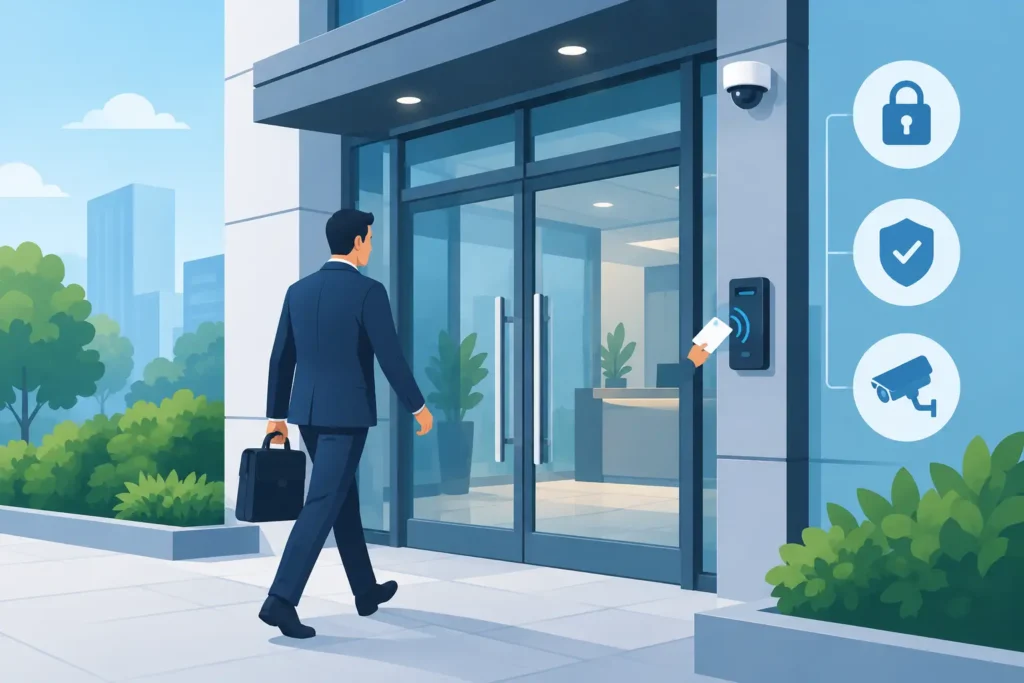
A delivery door propped open for convenience, an employee badge that was never deactivated, or an unmonitored side entrance can create the same problem: unauthorized access with little warning. Secure business entry points give organizations control over who enters, when they enter, and what happens when an access event falls outside normal routines.
For offices, retail locations, industrial sites, institutions, and multi-tenant properties, the goal is not to turn every doorway into an obstacle. It is to create a controlled, documented path for employees, visitors, vendors, and emergency responders while making unauthorized entry difficult and immediately visible.
Start With the Entry Points That Create the Most Risk
The front door is rarely the only door that matters. Facilities managers should assess every opening that provides access to people, inventory, sensitive information, equipment, or restricted operations. That includes rear doors, loading docks, staff entrances, stairwell doors, rooftop access, gates, shared corridors, and interior doors leading to server rooms, records storage, cash handling areas, or executive offices.
Each entry point should be evaluated by how it is used, who needs access, and what the consequence would be if it were breached. A public-facing retail entrance needs a different approach than a warehouse receiving door. A medical office may need tighter controls around patient records, while a construction yard may need strong perimeter protection after hours.
A practical assessment also looks at the surrounding environment. Is the entrance visible from the street or concealed behind the building? Is lighting adequate? Does the door close and latch reliably? Can someone tailgate behind an authorized employee? Security design works best when these physical details are addressed before technology is added.
Build Secure Business Entry Points in Layers
A single lock is not a complete security plan. Reliable protection comes from layers that support one another: physical barriers, access credentials, video verification, alarm detection, and a defined response process. If one layer is bypassed or fails, another can provide evidence, alert the right people, or delay entry long enough for action to be taken.
Use the Right Door and Hardware
The strongest access-control system cannot compensate for a weak frame, damaged strike plate, loose hinge, or door that does not close fully. Exterior entry doors should be commercial-grade and matched with hardware suitable for the site and traffic level. High-use doors may require closers, panic hardware, reinforced frames, or protected hinges.
Pay close attention to doors that are routinely used for deliveries or waste removal. They are often opened frequently and may be left unsecured during busy periods. Where operations allow, designate delivery windows, provide staff oversight, and use door-position monitoring so management knows when a door has been left open too long.
Gates deserve the same consideration. A gate with an electronic opener but no controlled credential, camera coverage, or anti-tailgating plan can give a false sense of protection. The correct setup depends on vehicle volume, visitor traffic, and whether the site is occupied around the clock.
Control Access by Role, Time, and Location
Keys are simple, but they are difficult to manage once copied, lost, or retained by a former employee. Electronic access control gives organizations a clearer record of entry activity and greater control over credentials. Cards, fobs, mobile credentials, PINs, and biometric tools can all be appropriate depending on the environment.
The key is to grant the least access needed for a person to do their job. An employee may need access to a main entrance and work area but not the storage cage, IT room, or executive suite. A cleaning contractor may need access only during scheduled evening hours. A vendor may require temporary access that expires automatically after a service visit.
Time-based permissions are particularly valuable for reducing after-hours exposure. They allow doors to operate normally during business hours while requiring an approved credential outside those hours. For higher-risk areas, two-factor access, such as a card plus PIN, adds another layer of accountability. It may not be necessary at every door, but it can be appropriate for controlled inventory, sensitive records, or critical infrastructure.
Make Every Entry Event Visible
Access logs tell you that a credential was used. Video helps confirm who used it, whether someone followed them inside, and what occurred before or after the door opened. Cameras positioned at entry points should capture clear views of faces, approach paths, and the door itself without being blocked by glare, poor lighting, or signage.
AI-powered video analytics can strengthen this coverage by identifying events that deserve attention, such as a person lingering near an entrance, movement in a restricted area, or a door opened at an unusual time. Analytics should support human decision-making, not replace it. The most useful system is one that sends meaningful alerts and gives trained personnel enough context to respond appropriately.
For many organizations, remote monitoring provides the missing after-hours layer. A monitoring team can review alarm activity or video alerts in real time, follow established site instructions, contact designated staff, and coordinate an appropriate response. This is especially useful when a business does not have security staff on site overnight.
Detect Forced, Propped, and Tampered Doors
Not every intrusion begins with a forced entry. A door may be propped open by staff, held open by a malfunctioning closer, or tampered with until a lock no longer engages. Door contacts, latch monitoring, tamper detection, and intrusion alarms help identify these conditions before they become larger problems.
An alarm plan should distinguish between normal activity and events requiring immediate attention. For example, a rear delivery door may be expected to open at 8:00 a.m. but should generate an alert if it remains open for 10 minutes after closing time. Clear rules reduce alarm fatigue and help staff take alerts seriously.
Plan for People, Not Just Equipment
Entry security often fails because procedures are unclear or inconvenient. Employees prop doors open because they are carrying supplies. Reception staff admit visitors because they do not have a reliable check-in process. Managers delay deactivating former employees because responsibility is spread across departments.
Simple operating procedures close these gaps. Assign ownership for issuing and removing credentials. Require visitors and contractors to check in, wear identification when appropriate, and be escorted in restricted areas. Establish a process for lost cards, stolen keys, terminated employees, and emergency lockouts.
Training should be practical and brief. Employees need to understand why tailgating matters, how to report a damaged lock, and what to do if an unfamiliar person asks to be let in. They should also know that security measures are there to protect people and operations, not to create unnecessary friction.
For sites with frequent visitors, a reception desk, intercom, video intercom, or managed visitor process may be more effective than relying on staff judgment alone. The right solution depends on the volume of visitors and the sensitivity of the site. A small professional office may need a simple controlled front entrance, while a larger facility may benefit from designated visitor zones and escorted access.
Connect Entry Security to a Response Plan
Detection only has value when someone knows what to do next. Every secure entrance should be supported by written response instructions that identify who receives alerts, who can make access decisions, when police or emergency services should be contacted, and how incidents are documented.
After an incident, access logs and video should be reviewed promptly. This helps determine whether the event was a failed credential, employee error, attempted theft, vandalism, or a broader security concern. Documentation also supports insurance claims, internal investigations, disciplinary decisions, and future improvements.
Regular testing matters as much as installation. Test door contacts, credentials, intercoms, cameras, lighting, and alarm communications on a defined schedule. Review access permissions when employees change roles, vendors change, or operations expand. A system that worked well two years ago may no longer match the way the building is used.
Choose a System That Can Grow With Your Operation
Security needs change as organizations add staff, open new locations, extend operating hours, or take on higher-value inventory. A scalable design allows new doors, cameras, users, and monitoring services to be added without replacing the entire system.
Integration can also reduce complexity. When access control, intrusion alarms, video surveillance, and remote monitoring are designed to work together, the response team has better information during an event. Instead of sorting through separate systems, they can see the access event, review related video, and follow a predefined response process.
The right balance depends on your risk profile and budget. A small office may begin with controlled exterior doors, video coverage, and monitored alarms. A larger warehouse or institution may need multiple access levels, perimeter gates, visitor management, analytics, and on-site guard support. The objective is not to buy more technology than necessary. It is to create dependable protection that matches the site, the people, and the consequences of unauthorized entry.
A professional security assessment can turn overlooked doors and inconsistent procedures into a clear protection plan. Maritect Investigations & Security can help organizations design, install, monitor, and maintain entry security that supports daily operations while keeping people, property, and critical areas under control.
