

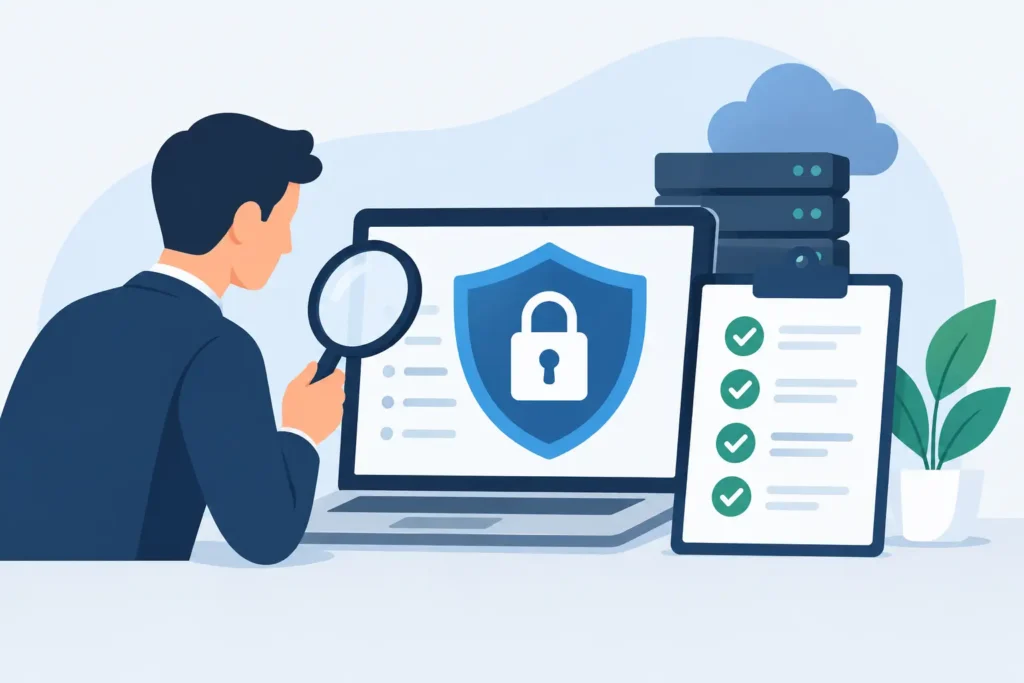
A camera that records an incident but does not provide a usable image is not much help. An alarm that sounds without reaching the right person can create the same false sense of security. Security audits look beyond whether equipment is installed. They test whether your people, systems, procedures, and response coverage work together when an actual event occurs.
For property owners, facility managers, and business operators, that distinction matters. Security risks often develop in ordinary places: a delivery door that is routinely propped open, a blind spot behind a dumpster, an employee whose access remains active after leaving, or an after-hours alarm notification that goes unanswered. A professional review turns these small weaknesses into clear, manageable actions.
What Security Audits Examine
A security audit is a structured assessment of how well a site prevents, detects, documents, and responds to threats. Its purpose is not to sell unnecessary equipment or create a lengthy report that sits unread. It should provide a practical view of current exposure and a prioritized plan for improving protection.
The scope depends on the property. A retail operation may need closer attention on cash handling, shoplifting patterns, receiving areas, and opening and closing routines. An industrial facility may be more concerned with perimeter intrusion, contractor access, equipment theft, and safety-sensitive areas. A residential property may need visibility around entrances, garages, package delivery locations, and remote access to smart security controls.
Most security audits review four connected areas:
- Physical protection, including doors, locks, gates, lighting, fencing, key control, and restricted areas.
- Electronic systems, such as CCTV coverage, video quality, alarm devices, access control, monitoring, backups, and system health.
- Human procedures, including visitor management, staff training, incident reporting, opening and closing protocols, and emergency contacts.
- Response readiness, covering alarm escalation, guard deployment, police or emergency coordination, evidence preservation, and business continuity.
Looking at these areas together is essential. A stronger lock may delay entry, but it does not replace detection. AI video analytics can identify activity in a restricted zone, but alerts still need an assigned recipient and a defined response. A security plan is effective when each layer supports the next.
Why Security Audits Find Problems Routine Checks Miss
Many organizations inspect security only after a theft, break-in, workplace conflict, or liability concern. By then, the immediate question becomes, “Why did no one see this coming?” A scheduled audit changes that posture. It helps identify conditions that make an incident more likely before they become a loss, disruption, or reputational problem.
Routine walkthroughs are useful, but they can miss gradual changes. Cameras may have become obstructed by new shelving, landscaping, parked vehicles, or construction. A business may have expanded into adjacent space without extending access control. Staff turnover can leave outdated codes, keys, contact lists, and permissions in circulation. These are common issues because operations change faster than security plans do.
An audit also tests quality, not just presence. A site may have cameras at every entrance but poor nighttime coverage. It may have an alarm panel but no current test records, battery maintenance schedule, or reliable after-hours call tree. It may have access control records but no policy for reviewing them. Equipment cannot compensate for unclear ownership and inconsistent procedures.
Start With Risk, Not a Shopping List
The best assessment starts with the site’s actual risk profile. There is no single correct camera count, access-control setup, or guard schedule for every property. The right approach depends on what needs protection, when the site is most exposed, and what disruption would mean to the organization.
A reviewer should ask direct questions. What assets are most attractive to theft or damage? Which entrances are used after hours? Where do employees, visitors, contractors, and deliveries overlap? Are there recent incidents, repeated trespassing concerns, or neighborhood patterns that affect the property? Does the organization handle sensitive information, high-value inventory, controlled materials, or vulnerable occupants?
Risk also includes operational impact. A minor break-in at a storage room may be inconvenient. A security failure at a medical office, distribution facility, school, or executive event can affect people, operations, insurance, customer trust, and legal obligations. This is why recommendations should be proportionate. Some sites need improved lighting and better door control. Others need integrated surveillance, remote monitoring, trained guards, and a formal response plan.
Assess Cameras for Useful Evidence and Faster Alerts
Video surveillance is often the most visible part of a security program, yet camera placement alone does not guarantee effective coverage. An audit should determine whether each camera has a purpose: identification at an entrance, observation at a loading dock, coverage of a transaction point, or perimeter awareness in a vulnerable area.
Review image quality during the times that matter most. A clear daytime image can become unusable after dark if lighting, camera settings, or infrared performance are inadequate. Check whether faces can be identified at entry points, whether license plates can be captured where needed, and whether the view remains clear in rain, glare, snow, or changing seasons.
Video retention deserves attention as well. If an incident is discovered days later, can the relevant footage still be retrieved? Is it easy for authorized staff to find, export, and preserve video without altering the original record? If remote viewing is used, are user accounts protected and access permissions reviewed?
AI-powered analytics can make large camera systems more manageable by filtering routine movement and flagging events such as perimeter entry, loitering, line crossing, or activity in restricted zones. The trade-off is that analytics need thoughtful configuration. Settings that are too sensitive can create false alerts. Settings that are too narrow can miss meaningful activity. Testing and ongoing adjustment are part of reliable performance.
Verify Access, Alarms, and After-Hours Coverage
Access control should answer a simple question: who can enter which area, at what time, and why? A review should compare access permissions with current roles and identify former employees, contractors, or temporary users whose credentials should be removed. Mechanical keys require the same discipline. If key distribution is not documented, it becomes difficult to know who can enter a site.
Alarm systems require a different kind of review. Confirm that devices are operating, zones are correctly labeled, and staff understand arming and disarming procedures. Check whether vulnerable points such as rear doors, roof access, equipment rooms, and emergency exits are protected appropriately. A door contact may work perfectly, but it cannot address an unmonitored window or a recurring problem with staff bypassing procedures.
After-hours response is where many plans are tested. Who receives an alarm signal at 2 a.m.? What happens if that person does not answer? Is there a verified escalation path? Is a trained responder available to assess the site, coordinate with emergency services when needed, and document what happened? Remote monitoring and mobile response can provide continuity without requiring an owner or manager to make every decision alone.
Turn Findings Into a Working Security Plan
A security audit should end with priorities, responsibilities, and timelines. Not every improvement has to happen immediately. The clearest plans separate urgent corrections from scheduled upgrades and longer-term investments.
Urgent actions may include repairing a failed lock, removing inactive credentials, correcting a camera blind spot at a primary entrance, or updating emergency contacts. Near-term improvements might involve adding coverage to a loading area, improving lighting, integrating alarm and video systems, or training staff on visitor procedures. Larger projects can be phased around budgets, operations, and construction schedules.
Assign ownership for every action. If a recommendation has no responsible person and no review date, it is likely to be delayed. Documentation should also be useful during an incident. Staff should know who to contact, where to find procedures, how to preserve evidence, and when to escalate a concern.
Security is not static. New tenants, staffing changes, expanded hours, construction, seasonal weather, and changes in local activity can all alter a property’s exposure. Many organizations benefit from an annual review, with additional assessments after a serious incident, facility expansion, system upgrade, or change in operations.
Maritect Investigations & Security Limited approaches security as an integrated program, combining site assessment with surveillance, alarms, access control, monitoring, guarding, and responsive support. The goal is practical protection that fits how a property actually operates, not a one-size-fits-all package.
A useful next step is simple: walk your site after normal hours and view it as someone looking for an easy opportunity. Then schedule a professional assessment to confirm what your current systems can detect, who will respond, and where a small correction could prevent a much larger problem.
