

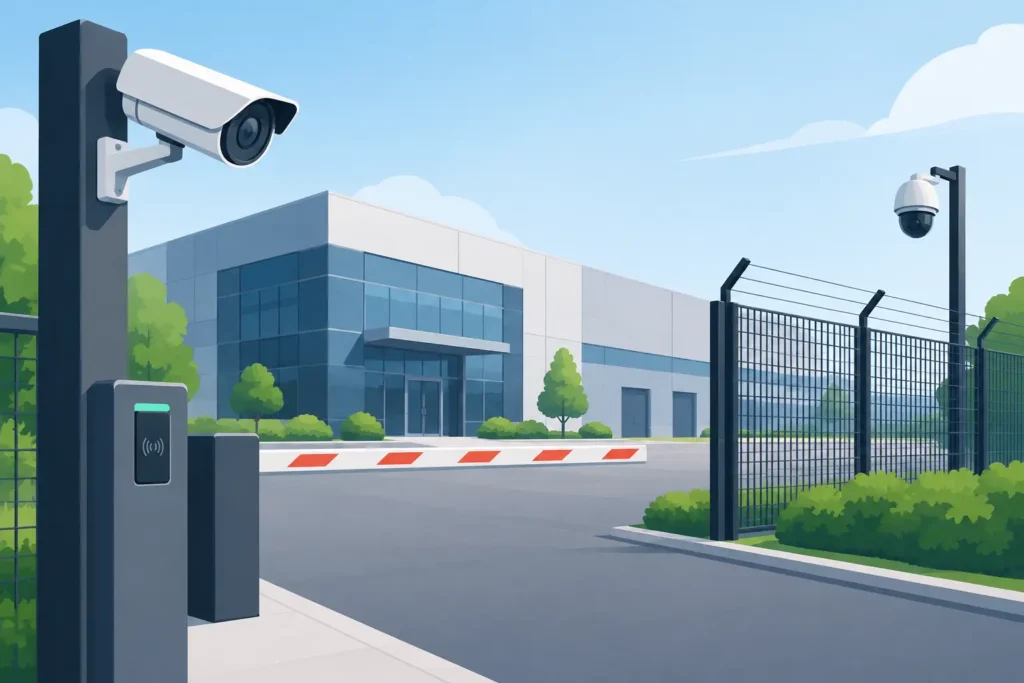
A camera mounted over a door, a keypad that no longer logs entries, or an alarm that only sounds onsite can create a false sense of protection. The top physical security upgrades do more than add equipment. They give property owners and operators faster awareness, clearer evidence, controlled access, and a defined response when something goes wrong.
For a retail store, office, warehouse, residential property, or institutional facility, the right improvements depend on the site’s risks, operating hours, layout, and the people who need access. A stronger security plan connects technology, procedures, and professional response rather than relying on a single device to carry the entire load.
Start With the Risks That Matter Most
Security upgrades should begin with a practical site assessment. Before selecting cameras or changing locks, identify where loss, disruption, or personal safety concerns are most likely to occur. Common pressure points include unmonitored side doors, loading areas, parking lots, reception desks, equipment rooms, vacant units, and areas where staff work alone.
Review recent incidents as well as near misses. Missing inventory, trespassing, after-hours loitering, damaged fencing, unauthorized visitors, and repeated false alarms all reveal something about the current system. So do operational changes. A growing team, a new shift schedule, a move to hybrid work, or a construction project can introduce access and visibility gaps that did not exist a year ago.
The objective is not to make every area look equally fortified. It is to direct protection where it will reduce risk and support normal operations. An executive office may need discreet access control, while a distribution yard may need visible cameras, perimeter detection, and reliable lighting.
Top Physical Security Upgrades That Deliver Results
AI-enabled CCTV with purposeful camera placement
Modern video surveillance is one of the most valuable upgrades when it is designed around real activity, not simply installed wherever a cable is convenient. High-definition cameras can document faces, vehicles, entrances, cash-handling areas, corridors, and exterior approaches. But coverage quality depends on placement, lighting, camera angle, retention settings, and whether footage can be found quickly after an event.
AI video analytics adds another layer of value. It can identify people, vehicles, line crossing, loitering, and activity in restricted areas, helping teams focus on alerts that may require attention. This is especially useful for larger properties where someone cannot watch every camera feed continuously.
Analytics are not a replacement for professional judgment. Snow, animals, changing weather, and busy public areas can create unwanted alerts if settings are too broad. Proper configuration, periodic testing, and human review keep the system useful rather than noisy.
Professionally monitored intrusion alarms
An alarm system should do more than make noise after a door is forced open. Professionally monitored intrusion alarms can provide around-the-clock oversight for doors, windows, motion areas, glass break, equipment rooms, and other vulnerable points. When a verified alarm event occurs, a monitoring process can help ensure it is recognized and acted on even when the owner or manager is unavailable.
This is a major advantage for businesses that close overnight, properties with multiple locations, and homes that may be empty for extended periods. Remote notification is helpful, but it still leaves the recipient responsible for deciding what to do at 2:00 a.m. Monitoring creates a clearer response path.
A good installation also accounts for daily use. Staff need simple arming and disarming procedures, clear authority levels, and support when a device faults. An alarm system that employees regularly bypass because it is inconvenient is not delivering dependable protection.
Access control that creates accountability
Traditional keys are difficult to manage once they have been copied, misplaced, or issued to former employees. Electronic access control replaces uncertainty with a record of who entered, where, and when. Credentials can include key cards, fobs, mobile access, PIN codes, or biometric options, depending on the site and required level of control.
The strongest benefit is not convenience alone. Access permissions can be limited by role, location, and time of day. A contractor may be allowed into a mechanical room for a short period without receiving access to the rest of the building. A former employee’s credential can be disabled without rekeying every door.
For some sites, access control should be integrated with video verification and alarms. If a door is propped open or forced, the system can create an event that is easier to investigate. This connected approach is particularly effective at offices, schools, medical facilities, multi-unit properties, and sites with sensitive records or high-value equipment.
Perimeter protection and better exterior lighting
Many incidents begin before anyone reaches the building. Fences, gates, locks, vehicle barriers, signage, and exterior lighting establish boundaries and discourage casual trespassing. They also help cameras capture useful images by improving visibility around entrances, walkways, parking lots, and loading zones.
Not every property needs a high-security fence or a gatehouse. A small commercial site may gain more from repairing damaged fencing, replacing weak gate hardware, and adding motion-activated lighting at blind spots. An industrial yard may require controlled vehicle access, monitored gates, and cameras that cover the full perimeter.
Lighting should be planned carefully. Overly bright fixtures can create glare or deep shadows that reduce camera performance. The goal is even, reliable illumination in the places people and vehicles actually move.
Remote monitoring and verified response
Remote monitoring turns cameras, alarms, and access events into an active security operation. Rather than waiting until the next morning to review footage, trained personnel can assess designated alerts as they occur and follow established response procedures. Depending on the site, that may involve contacting a keyholder, dispatching a guard, or engaging emergency services when appropriate.
This upgrade is especially valuable where a full-time onsite guard is not practical but after-hours risk remains high. It can also support properties with recurring trespassing, construction materials, vacant buildings, or remote locations.
The trade-off is that monitoring works best when the underlying system is well designed. Cameras need clear views. Alert rules need to reflect real risks. Contact lists and escalation instructions must remain current. Technology is only as effective as the plan behind it.
Onsite guarding for people, events, and sensitive periods
Some risks require a physical presence. Uniformed guards can deter unwanted behavior, manage visitor access, conduct patrols, document incidents, and provide reassurance to staff and guests. This can be appropriate for retail environments, events, labor disputes, executive protection assignments, high-traffic facilities, or temporary periods of elevated risk.
Guarding is most effective when officers have clear post orders and the right technology. A guard who can verify alarms, view camera feeds, report conditions in real time, and follow escalation procedures becomes part of an integrated security program. Simply placing someone at a desk without defined responsibilities often produces less value.
Make Security Systems Work Together
The most effective upgrades share information. An access event can call up nearby video. A door alarm can notify remote monitoring personnel. A guard can respond with the site’s verified details rather than walking into an uncertain situation without context.
Integration also simplifies management. Instead of juggling separate apps, disconnected footage, and handwritten visitor logs, operators can maintain clearer records and respond from a more complete picture. For multi-site organizations, centralized oversight helps establish consistent standards while allowing each location to address its own risks.
Maritect Investigations & Security Limited designs integrated programs that combine surveillance, alarms, access control, monitoring, and protective services based on how each property operates. The goal is dependable coverage, not a collection of devices that work in isolation.
Plan for Maintenance, Training, and Change
A security upgrade is not finished when installation is complete. Cameras need cleaning and testing. Alarm batteries and communication paths need inspection. Access permissions should be reviewed when employees change roles or leave. Emergency contact details and response procedures must be current.
Training matters just as much. Employees should know how to report suspicious activity, use credentials correctly, protect visitor access, and avoid disabling protective measures for convenience. Managers should know who can access security records and what to do after an incident.
Review performance after the system has been in use. Are alerts meaningful? Are there repeated blind spots? Does footage provide usable identification? Are false alarms consuming time? Small adjustments can significantly improve reliability without requiring an entirely new system.
The right upgrade should give your team more control without making daily work harder. Start with the risks that affect your people, property, and continuity most, then build protection that remains ready when your attention is needed elsewhere.
