

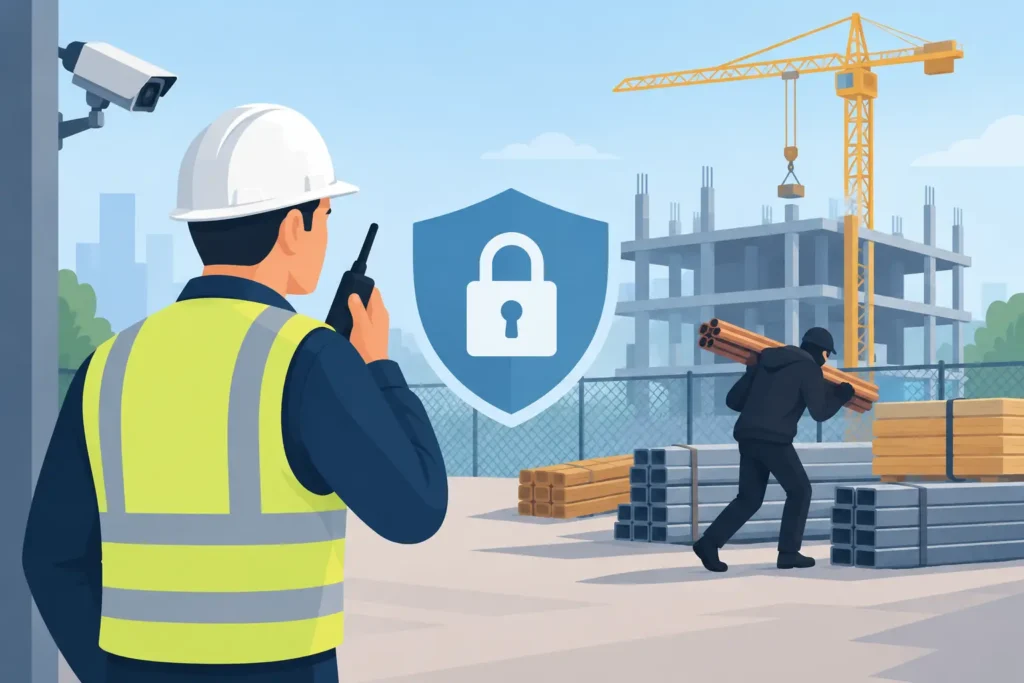
A missing generator, a stolen skid steer, or a trailer cleared out overnight can stop a project before the workday even begins. The top ways to prevent construction theft are not limited to buying a camera or putting up a fence. They involve building layers of protection that make a site harder to enter, harder to steal from, and easier to respond to when something goes wrong.
Construction sites are attractive targets because valuable materials, tools, fuel, and equipment are often left exposed after hours. Sites also change quickly. A security plan that worked during excavation may leave gaps once framing, deliveries, subcontractors, and new access points enter the picture. The right approach keeps pace with the job and gives site managers clear visibility and control.
Top Ways to Prevent Construction Theft: Build Layers
The most effective construction-site security combines physical barriers, controlled access, visible deterrence, real-time detection, and documented procedures. No single measure stops every incident. A fence can be cut, a camera can be ignored, and a lock can be bypassed. Together, however, these measures reduce opportunity and improve the chance of fast intervention and recovery.
1. Start with a site-specific security assessment
Before installing equipment or assigning guards, assess the site as it actually operates. Identify entry points, blind spots, material storage areas, fuel tanks, temporary offices, equipment parking zones, and places where a vehicle could load and leave unnoticed.
Also consider the surrounding environment. An isolated project with limited street traffic has different risks than an urban redevelopment site with pedestrians, neighboring businesses, and multiple access gates. Review lighting, sightlines, neighboring properties, and the time periods when the site is most vulnerable. This assessment should be updated at major project phases, not filed away after the first week.
2. Control who can enter the jobsite
Open access creates uncertainty. If supervisors cannot quickly determine who was authorized to be on site, investigating a theft becomes much more difficult.
Use locked gates and a clear sign-in process for employees, subcontractors, delivery drivers, and visitors. For larger or higher-risk projects, access-control credentials, codes, or managed gate systems can provide a record of entries and exits. Codes should not be shared broadly or left unchanged for months. Remove access promptly when a worker leaves the project or a subcontractor completes its scope.
The goal is not to slow down legitimate work. It is to establish accountability without creating a bottleneck at the start of every shift.
3. Secure tools, materials, and equipment differently
Not every asset needs the same level of protection. Hand tools, copper wire, power tools, fuel, heavy equipment, and building materials each present different theft risks. Treating all of them as a single inventory category can leave the most valuable items exposed.
Store high-value portable tools in locked containers or secured trailers. Use hardened locks, protected hasps, and containers that cannot be easily lifted or dragged away. Keep valuable materials out of direct view from the street whenever possible, and schedule deliveries close to the time materials will be installed.
For heavy equipment, use ignition locks, key control, immobilizers, wheel locks, or tracking devices as appropriate. Remove keys at the end of each day and keep them under controlled custody. Equipment that is difficult to start, move, and transport is less attractive to opportunistic thieves.
4. Install visible, well-planned surveillance
Video surveillance is most useful when cameras are positioned for a purpose. A camera aimed at a wide open area may show that someone was present, but it may not capture a face, a vehicle plate, or the detail needed to understand what occurred.
Cover gates, access roads, equipment compounds, trailer entrances, material storage, and other high-value areas. High-definition cameras, night vision, and AI-enabled video analytics can help identify people, vehicles, and unusual activity after hours. Visible cameras and clear signage also send a direct message: this site is actively protected.
Placement matters as much as the equipment itself. Cameras should be mounted high enough to resist tampering, but close enough to capture usable evidence. Confirm that trees, machinery, stacked materials, and temporary structures will not block the view as the project evolves.
5. Add 24/7 monitoring and verified response
A camera recording an incident is valuable, but it may not prevent a loss while it is happening. Remote monitoring adds a human response layer to active alerts. When an alarm or video analytic detects motion in a restricted area, trained operators can review the event, assess the threat, issue an audible warning where available, and escalate to site contacts or emergency services based on established procedures.
This is especially useful for sites that are vacant overnight, over weekends, or during holiday shutdowns. It can also reduce false dispatches compared with alarm systems that trigger without video verification. The right response plan depends on the site, the local environment, and the level of risk, but every project should define who gets called, in what order, and what action they are authorized to take.
6. Use lighting to remove hiding places
Dark corners give intruders time and cover. Effective exterior lighting improves camera performance, helps guards patrol safely, and makes a site less appealing after hours.
Focus lighting on gates, parking areas, equipment storage, paths between trailers and work zones, and the perimeter near valuable materials. Motion-activated lighting can be a useful supplement, but it should not be the only strategy on a site with frequent nighttime activity. Consistent lighting is generally better for surveillance coverage, while carefully aimed fixtures can reduce glare that interferes with cameras or affects nearby properties.
7. Maintain a reliable inventory process
Theft is not always discovered immediately. A missing tool may be mistaken for one moved by another crew, while material losses can remain unnoticed until installation is delayed. Routine inventory checks close that gap.
Assign responsibility for logging high-value tools, serial numbers, equipment hours, material deliveries, and transfers between locations. Mark equipment with permanent identification where practical. Daily checks may be appropriate for portable tools and fuel, while weekly audits may work for bulk materials. The frequency should reflect the value of the asset and the pace of the project.
Accurate records support insurance claims, police reports, and internal investigations. Just as importantly, they allow managers to spot patterns before a small loss becomes a repeated problem.
8. Secure the perimeter after every shift
A site can have strong security systems and still be vulnerable because a gate was left open or a temporary fence panel was moved for a delivery and never reset. End-of-day checks are simple, but they need ownership.
Designate a supervisor, foreperson, or security provider to verify that gates are locked, fence lines are intact, keys are secured, tools are stored, equipment is immobilized, and alarm systems are armed. Document exceptions, such as an overnight concrete pour or scheduled delivery, so the monitoring and response plan reflects legitimate activity.
Temporary fencing is often necessary, but it should be inspected regularly. Panels need proper anchoring, access gaps need attention, and damaged sections should be repaired quickly. A weak perimeter becomes known quickly when a project is visible from public areas.
9. Use guards where technology alone is not enough
Onsite security officers can provide a strong visible deterrent, particularly at high-value projects, large equipment yards, active sites with multiple overnight operations, or locations facing repeated trespassing. Guards can conduct patrols, check gates, monitor contractors, document incidents, and respond to conditions that automated systems cannot fully interpret.
Guarding should be matched to the risk. A fixed post may be appropriate at a single busy entrance, while mobile patrols can cover a larger or lower-risk footprint. Combining trained officers with monitored surveillance provides both physical presence and continuous visibility, without relying on one measure alone.
10. Prepare workers to report suspicious activity
Your crews are often the first people to notice an unfamiliar vehicle, a damaged lock, missing materials, or someone moving around a restricted area. Give them a clear, practical reporting process and reinforce that safety comes first. Workers should not confront suspected thieves.
Share the site contact number, explain what details are helpful to report, and make sure supervisors know how to preserve video or other evidence after an event. Training should also cover everyday habits that reduce risk, including key control, secure storage, gate procedures, and reporting lost access credentials immediately.
Make Security Part of Project Operations
Construction theft prevention works best when it is planned alongside scheduling, logistics, and site safety rather than treated as an afterthought. A customized program can integrate surveillance, alarms, access control, remote monitoring, and uniformed guarding around the actual demands of the jobsite.
The most useful next step is to walk the site after normal working hours and view it as an intruder would. What can be reached, removed, hidden behind, or driven away with? Addressing those answers now protects your equipment, your schedule, and the people counting on the project to stay moving.
