

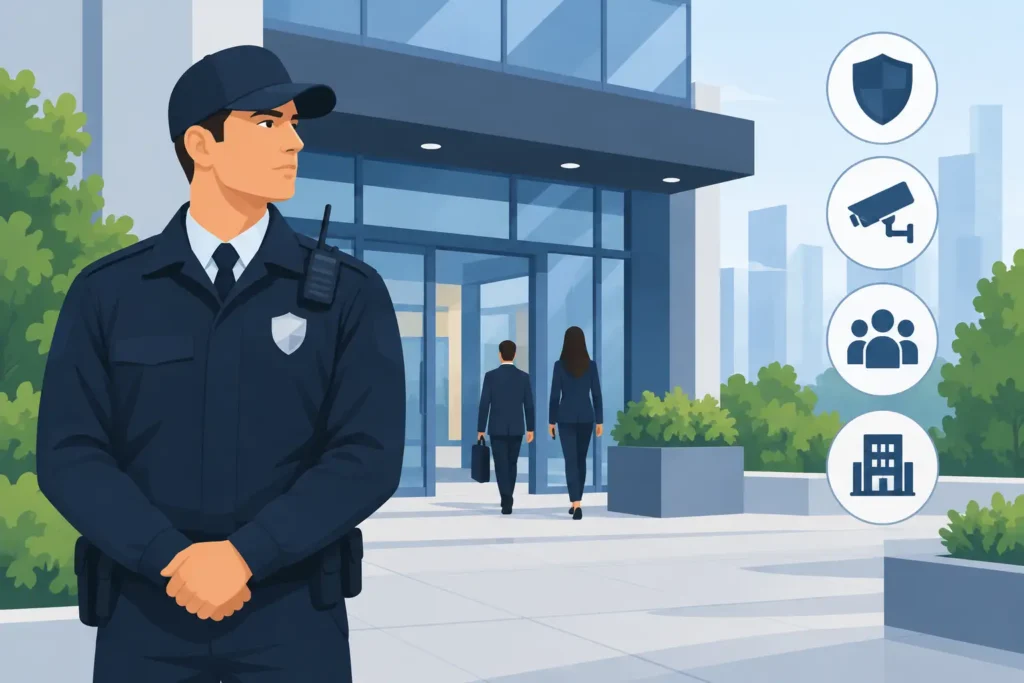
A camera can show you what happened. An alarm can signal that something is wrong. But neither can meet a delivery driver at a restricted entrance, de-escalate a confrontation in a lobby, or make a visible security decision while an incident is unfolding. That is the practical question behind when should businesses hire guards: when technology, procedures, or existing staff can no longer provide the level of presence, response, and accountability the site requires.
For many businesses, hiring guards is not a reaction to a single dramatic event. It is a measured operational decision based on property risk, hours of operation, public access, staffing realities, and the cost of disruption. The right guard program can protect people and assets while helping the business stay open, organized, and in control.
When Should Businesses Hire Guards?
Businesses should consider professional guard coverage when there is a clear gap between the risk they face and their ability to respond safely. That gap may appear after repeated theft, trespassing, vandalism, or employee safety concerns. It may also arise during a one-time event, a construction project, a labor dispute, or a period of reduced staffing.
The key is not simply whether an incident has occurred. It is whether the site has a credible, reliable way to deter problems, identify them early, and respond appropriately. A security guard adds a human layer to that plan. Guards observe conditions in real time, enforce site procedures, document activity, support visitors and staff, and contact emergency services when needed.
You have recurring theft, trespassing, or vandalism
A pattern matters more than a single loss. If inventory is repeatedly going missing, doors are being tested after hours, unauthorized people are entering the property, or damage is appearing around the site, visible guard coverage may be appropriate.
Guards can conduct scheduled and randomized patrols, inspect access points, challenge unauthorized activity according to site policy, and create incident reports that reveal patterns over time. Their presence can discourage opportunistic crime before it becomes a routine business expense.
This is especially relevant for retail locations, warehouses, vehicle lots, construction sites, apartment communities, and properties with valuable equipment stored outdoors. In these settings, cameras and alarms remain valuable, but a guard can verify what is happening and respond within the scope of the security plan.
Your staff are being asked to handle security issues
Managers, reception teams, maintenance crews, and retail employees often become the unofficial first line of security. That arrangement can work for minor customer-service concerns, but it becomes risky when staff are dealing with aggressive behavior, unauthorized access, suspicious activity, or after-hours incidents.
Hiring guards gives employees a clear escalation path. Staff can focus on their actual responsibilities while trained personnel manage access, observe behavior, support de-escalation, and maintain documentation. This can improve morale as well as safety, particularly for teams that work alone, open or close the premises, or interact with the public throughout the day.
A guard is not a substitute for emergency responders. However, a trained onsite professional can provide immediate observation, communication, and procedural support while police, fire, or medical services are contacted when required.
Your site has high-traffic or restricted-access areas
Some properties need more than a locked door and a sign-in sheet. Offices with sensitive records, industrial facilities, institutional settings, medical-adjacent sites, multi-tenant buildings, and executive workplaces may have visitors, contractors, vendors, and employees moving through the property all day.
A guard can manage visitor check-in, verify credentials, monitor restricted areas, control vehicle access, and ensure site rules are consistently applied. This is not about making a workplace feel unwelcoming. It is about creating an orderly, professional arrival process where people know who is expected, where they are permitted to go, and how to get help.
For higher-risk sites, guards can work alongside access control, video surveillance, and alarm systems. Integrated coverage gives decision-makers better visibility and creates a documented chain of events if an issue occurs.
Signs You Need Security Guards After Hours
After-hours vulnerability is one of the most common reasons to add guard services. A facility may be well staffed and well supervised during the day, then become quiet, dark, and exposed at night. If valuable assets remain onsite, a delayed response can turn a small issue into significant loss or downtime.
Guard coverage may be warranted when a property has frequent alarm activations, a history of break-ins, open gates, unsecured loading areas, or limited lighting around entrances and parking lots. It can also be useful when a business has no employee onsite to meet police, fire personnel, or service contractors after an incident.
The right level of coverage depends on the site. Some locations need a dedicated guard at a fixed post throughout the night. Others benefit from scheduled mobile patrols that check doors, inspect exterior areas, and confirm that the property is secure. A security assessment can help determine whether full-time coverage, targeted patrols, remote monitoring, or a combination is the most practical solution.
You need a safer opening and closing routine
Employees who open early, close late, carry deposits, or work in isolated areas face a different risk profile than a fully staffed daytime office. A uniformed guard can support opening and closing procedures, patrol parking areas, confirm that entrances are clear, and provide a visible presence during vulnerable transitions.
This approach is often valuable for retail stores, hospitality businesses, financial-service offices, cannabis operations, and facilities with late-night shifts. It also sends a clear message that the business takes employee safety seriously.
You are managing a sensitive event or disruption
Certain situations call for temporary guard services rather than a permanent program. Examples include large meetings, executive visits, product launches, tenant disputes, construction activity, layoffs, labor disputes, or strike-related concerns.
In these moments, security coverage should be planned around the actual operational need. Guards may manage entrances, maintain a professional perimeter, document activity, escort authorized individuals, and help protect uninterrupted access to the site. The goal is not confrontation. It is calm, consistent control that protects people and allows the organization to continue operating.
Guards Work Best as Part of an Integrated Plan
Physical guards are highly effective, but they should not be treated as the only answer to every security concern. Around-the-clock onsite coverage can be a significant investment. In many cases, businesses can achieve stronger results by pairing guards with technology that extends their awareness and improves response.
AI-enabled video analytics can identify activity in defined areas and reduce the noise of non-actionable alerts. Access control can limit entry to authorized personnel. Monitored alarms can create immediate notification pathways. Remote monitoring can provide another layer of oversight when a guard is not stationed at the property.
This combination lets a business place human coverage where it has the greatest value: at public-facing entrances, critical access points, high-risk periods, or locations where an immediate physical response is needed. It also creates better records for incident reviews, insurance matters, internal investigations, and future planning.
How to Choose the Right Guard Coverage
Before hiring guards, define what they need to accomplish. “Have someone watch the building” is too broad to produce a dependable result. A useful security plan identifies the assets and people being protected, the hours and areas of greatest risk, expected guard duties, reporting requirements, escalation procedures, and the technology already in place.
Consider whether your primary need is deterrence, access management, patrols, customer-facing support, incident response, or temporary event coverage. One site may need an unarmed uniformed guard at a reception desk; another may need overnight patrols supported by monitored cameras. The best fit depends on the environment, local requirements, and the level of risk.
Professional guard services should also include clear communication. You should know how incidents are reported, who receives notifications, what supervisors are available, and how coverage is maintained when schedules change. Consistency matters. A security plan only works when it is followed every shift.
Maritect Investigations & Security Limited helps organizations assess these needs and build customized coverage that combines trained personnel, surveillance, access control, alarms, and ongoing support. The objective is simple: give your people a reliable way to identify concerns early and respond with confidence.
A guard program should not begin only after a serious incident forces the issue. If your team is carrying security responsibilities it was not hired to manage, your property is exposed after hours, or recurring problems are affecting operations, it may be time to put professional protection in place before the next disruption tests your response.
