

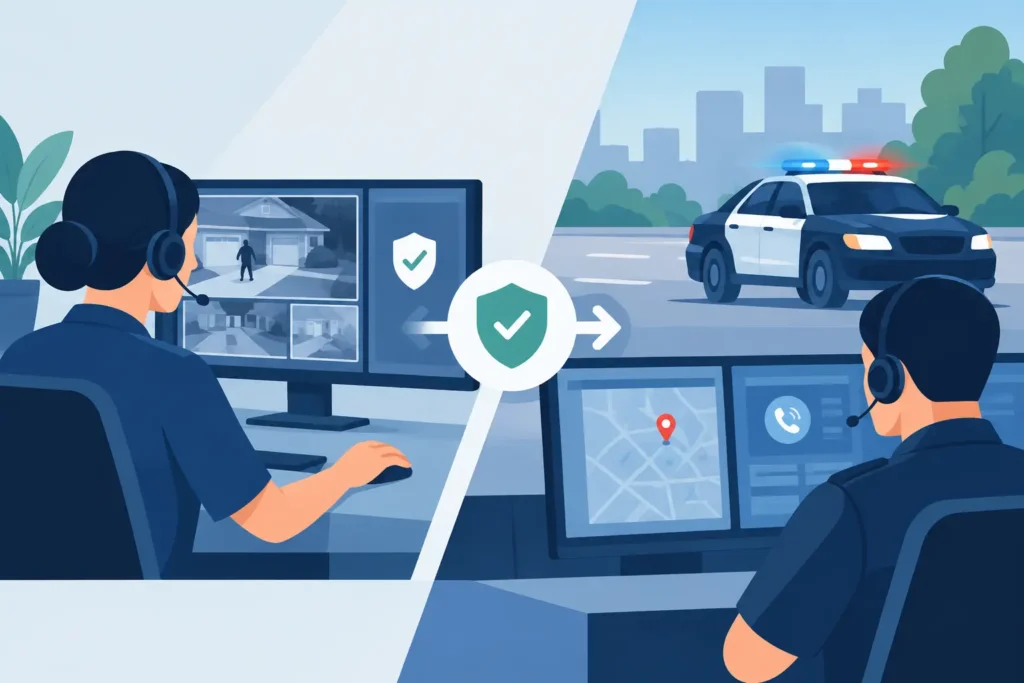
A triggered alarm at 2:13 a.m. creates one immediate question: is someone actually at risk, or is there a harmless reason for the signal? The difference between alarm verification versus police dispatch determines what happens next, who is contacted, and how quickly your property receives the right level of attention.
For a business owner or facilities manager, the goal is not simply to generate an alert. It is to make a confident, documented response decision while protecting people, assets, and operations. A professionally monitored system can help separate meaningful incidents from avoidable false alarms before a request for police response is made.
What Alarm Verification Means
Alarm verification is the process of confirming that an alarm event may require a response. The verification method depends on the site, the security system, the monitoring plan, and the nature of the alert.
A basic alarm may send a signal when a door opens, a motion detector activates, or a glass-break sensor detects a possible intrusion. That signal alone does not always show what caused the activation. A staff member may have entered unexpectedly, a door may not have latched correctly, or environmental conditions may have affected a sensor.
Verification adds context. A monitoring professional may review available video, attempt contact with authorized site representatives, check for multiple alarm zones, or assess whether AI video analytics identified a person, vehicle, or unusual movement in a restricted area. The aim is not to delay action. It is to provide the clearest possible picture as quickly as the situation allows.
For example, a single motion alert in a warehouse may warrant a review of camera footage and sensor activity. A forced-door signal paired with video showing an unauthorized person entering the building is a substantially different event. The second scenario gives responders stronger information and gives the property owner a more accurate understanding of what is happening.
What Police Dispatch Means
Police dispatch is the request for law enforcement to respond to an incident. It is an escalation step, not a substitute for alarm verification.
When a central monitoring station receives an alarm, it follows the response instructions established for that account and works within local emergency communication procedures. If the event appears to involve an active break-in, threat to people, or other urgent criminal activity, the monitoring team may request police response based on the available information and the client’s call list.
A request for dispatch does not guarantee a specific arrival time or outcome. Police agencies must prioritize calls based on their own policies, available resources, and the severity of events happening across their service area. That is why a security plan should not depend on a single response path.
For many properties, the stronger approach combines alarm monitoring with video verification, clear escalation procedures, and, where appropriate, mobile patrols or onsite guards. Each layer supports faster awareness and better continuity if an incident develops after hours.
Alarm Verification Versus Police Dispatch: The Key Difference
The clearest distinction is simple: verification helps determine whether an incident is likely real, while police dispatch requests law enforcement assistance after the event meets the required threshold or the situation demands immediate escalation.
Verification answers questions such as: Is there a person on site? Which entrance was breached? Is the movement inside a protected area? Is there a sign of forced entry? Is the event ongoing?
Police dispatch addresses a different question: Does this situation require law enforcement response now?
These functions work best together. Verification can provide a monitoring center with useful details to communicate when requesting assistance. At the same time, some events should be escalated immediately even if video is unavailable or a complete assessment is not possible. Duress alarms, panic signals, confirmed threats to life, and certain high-risk facilities may require an immediate emergency response according to the established protocol.
The right balance depends on the property and the risk. A retail store with recurring after-hours trespassing has different needs than an executive residence, a construction site, a health care facility, or an industrial operation with hazardous materials.
Why Verification Can Improve Security Operations
False alarms consume time, disrupt staff, and can create unnecessary pressure on local emergency resources. Repeated false alarm activity may also lead to fees or changes in response policies, depending on the jurisdiction. Reducing false alarms is therefore not only a technical issue. It is an operational responsibility.
Video verification and intelligent alarm handling can improve the quality of the information behind an escalation. Rather than reporting only that a sensor was activated, a monitoring professional may be able to report whether cameras show a person entering, a vehicle approaching a gate, or no visible activity at all.
That added context supports better decision-making. It can also help the property owner determine whether to send a keyholder, arrange a guard response, secure a vulnerable entry point, or preserve video for an investigation.
Verification is especially valuable at sites that are large, lightly staffed, or closed overnight. Distribution centers, equipment yards, offices, retail locations, and multi-unit properties often have areas that cannot be checked immediately by an employee. Remote monitoring keeps attention on the event without requiring someone to enter a potentially unsafe situation alone.
When Immediate Dispatch May Be the Right Choice
Not every alarm should wait for additional review. Your response plan should identify circumstances where the monitoring center is authorized to treat the alarm as urgent from the start.
A panic button activation, a confirmed hold-up alarm, a duress signal, or an alarm from a high-risk area may require immediate police notification. The same may apply when there is direct evidence of a violent threat, fire, medical emergency, or active intrusion involving people on site.
The critical point is clarity. Authorized contacts, emergency numbers, opening and closing procedures, access instructions, and escalation rules should be reviewed regularly. If the monitoring center cannot reach the correct person or the instructions are outdated, valuable time can be lost during a real event.
A well-designed plan also considers what happens after police are contacted. Who meets responders? Who can safely inspect the site? Who resets the alarm? Who documents damage, missing property, or employee statements? These details help restore normal operations faster and create a reliable record for follow-up.
Building a Response Plan That Fits Your Property
Security systems are most effective when they are built around the realities of the site, not a generic checklist. A small office may need monitored intrusion detection, access control, and cameras covering entrances. A larger facility may require perimeter detection, AI-enabled video analytics, guard patrols, and detailed event reporting.
Start by identifying the events that matter most. These may include unauthorized entry, forced doors, after-hours movement, package theft, gate breaches, employee safety concerns, or tampering with critical equipment. Then determine what information is needed to assess each event and who has authority to make response decisions.
Your system should also be configured to reduce preventable activations. That may mean adjusting motion detector placement, separating employee access schedules from alarm schedules, maintaining door hardware, updating user codes promptly, and ensuring cameras have clear views of key access points. A system that is frequently triggered for routine reasons will be harder for staff to trust.
For higher-risk sites, consider a layered response model. Remote monitoring can identify and assess an event, while mobile patrol or uniformed guarding provides a physical security presence when appropriate. Police can then be contacted when the situation calls for law enforcement authority. This approach provides options instead of forcing every alert into the same response path.
The Value of Clear, Documented Communication
During an alarm event, uncertainty creates risk. Monitoring personnel, keyholders, guards, and emergency responders need the same essential information: what happened, where it happened, when it happened, and what has been observed.
Detailed event records can make a meaningful difference after the immediate response. Video clips, access logs, alarm-zone history, guard reports, and call records may support internal reviews, insurance documentation, employee safety processes, or a police investigation.
Maritect Investigations & Security Limited designs integrated security programs that bring alarms, video surveillance, remote monitoring, access control, and protective services into a coordinated response plan. The objective is practical: identify real risks quickly, take the right next step, and keep your property protected around the clock.
The best response plan is one your team can rely on at 2:13 a.m., when decisions need to be clear, information needs to be credible, and every minute matters.
